A Cane Corso’s ideal daily routine includes dedicated sleep habits, typically ranging from 12-14 hours of sleep per day, to support their large breed needs for physical and mental recovery.
Does your Cane Corso seem to sleep all day, or are they restless at night? Understanding the natural sleep cycle of this magnificent breed is key to a happy, healthy dog. Many owners wonder if their gentle giant is getting enough rest, or if their sleeping habits are normal. It’s a common concern because a well-rested Cane Corso is a well-behaved Cane Corso. This article will guide you through precisely what your Cane Corso needs when it comes to sleep, from establishing a consistent routine to creating the perfect sleep environment. Get ready to unlock the secrets to a perfectly snoozing Corso!
The Sleeping Needs of a Cane Corso: More Than Just Naps

Cane Corsos are large, powerful dogs with a calm and loyal demeanor. Their size and strength require significant rest to recover from daily activities, whether it’s a vigorous play session, mental stimulation through training, or simply patrolling their territory. Unlike some smaller, high-energy breeds, Corsos often have a more relaxed pace, but this doesn’t mean they need less sleep. In fact, for a healthy Cane Corso, adequate sleep is a cornerstone of their physical and mental well-being.
Adult Cane Corsos typically need between 12 to 14 hours of sleep over a 24-hour period. This might sound like a lot, and it is, but it’s essential for their development and maintenance. Puppies and senior dogs may even require more. This sleep is crucial for muscle repair, immune system function, cognitive processing, and overall mood regulation. A sleep-deprived Cane Corso can exhibit behavioral issues such as irritability, hyperactivity, or even aggression, which is the opposite of their natural temperament.
Why Sleep is Non-Negotiable for Your Cane Corso
Think of sleep as your Cane Corso’s vital maintenance period. During their downtime, their bodies are hard at work:
- Muscle Growth and Repair: Especially important for growing puppies and active adults, sleep allows muscles to recover and build after exercise.
- Brain Function and Consolidation: While sleeping, their brains process information learned during the day, aiding in memory and learning. This is why consistent training and new experiences coupled with good sleep lead to faster learning.
- Immune System Strength: A well-rested dog has a stronger immune system, better equipped to fight off illnesses.
- Hormone Regulation: Sleep plays a role in regulating essential hormones, including those related to growth and stress.
- Emotional Balance: Just like us, dogs can become grumpy or anxious when overtired. Adequate sleep helps maintain their calm, confident demeanor.
Understanding these benefits highlights why establishing a healthy sleep routine isn’t just about convenience; it’s a fundamental aspect of responsible Cane Corso ownership. It directly impacts your dog’s health, behavior, and overall quality of life.
Establishing a Consistent Cane Corso Sleep Schedule

Consistency is king when it comes to your Cane Corso’s sleep habits. A predictable schedule helps regulate their internal body clock, leading to more restful sleep and fewer disruptions throughout the night.
The Evening Wind-Down Ritual
As the sun begins to set, it’s time to signal to your Cane Corso that the day is winding down. This means gradually reducing stimulation.
- Limit High-Energy Play: Avoid intense games or training sessions in the hour or two before bedtime.
- Calm Environments: Dim the lights in your home, lower the noise level, and avoid exciting activities.
- Last Potty Break: Ensure your dog has a final opportunity to relieve themselves right before you plan to settle down for the night. This helps prevent nighttime accidents and discomfort.
- Quiet Feeding: If your dog has a late-night meal, make it a calm, quiet affair, not part of a chaotic end-of-day rush.
Morning Wake-Up Calls
Just as a consistent evening routine is important, a consistent morning wake-up is also beneficial. While your Cane Corso might naturally wake with the sun, try to adhere to a regular wake-up time, especially during the week.
- Gentle Awakening: Avoid startling your dog. A soft word or a gentle touch can be enough.
- Immediate Potty Break: As soon as your dog is awake and ready, take them out for their first potty break of the day.
- Morning Meal: A structured feeding time in the morning sets a positive tone for the day.
- Morning Activity: A short, gentle walk or some light playtime can help transition them from sleep to wakefulness.
Napping Strategy for Day Sleepers
Cane Corsos, like many other canine companions, often take several naps throughout the day. This is perfectly normal and contributes to their overall sleep needs. The key is to ensure these naps are restful and not a sign of lethargy or boredom.
A healthy nap schedule for a Cane Corso might look something like this:
| Time of Day | Typical Nap Duration | Purpose |
|---|---|---|
| Late Morning (after breakfast and initial activity) | 1-2 hours | Rest and digestion, recovery from morning play. |
| Mid-Afternoon (after lunch/midday break) | 2-3 hours | Deep rest, essential for muscle repair and mental processing. |
| Late Afternoon/Early Evening (before dinner) | 1 hour | Short recharge before evening activities. |
If your Cane Corso is sleeping significantly more than this, or if they are difficult to rouse, it’s worth consulting with your veterinarian to rule out any underlying health issues. Conversely, a dog that is consistently restless and unable to settle for naps during the day might be experiencing anxiety, lack of sufficient exercise, or a need for more mental stimulation.
Creating the Ideal Sleep Environment for Your Cane Corso

Where your Cane Corso sleeps is just as important as when they sleep. A comfortable, safe, and quiet space will encourage deeper, more restorative sleep.
Choosing the Perfect Bed
Cane Corsos are large dogs, and they need beds that can accommodate their size and provide ample support. Think of their bed as their personal sanctuary.
- Size Matters: Ensure the bed is large enough for your dog to stretch out completely and reposition themselves comfortably. A general guideline is that the bed should be at least twice the length of your dog from nose to tail.
- Support and Comfort: Look for orthopedic or memory foam beds. These are excellent for providing joint support, which is especially important for a large breed prone to hip and elbow issues.
- Durability: Cane Corsos can be strong chewers, especially as puppies. Opt for durable, chew-resistant materials if this is a concern.
- Washability: Dogs can be messy, so easily washable covers are a huge plus.
Popular choices for large breeds include bolster beds that offer a sense of security, or simple, flat orthopedic mats. Some owners also opt for raised beds, which can help with temperature regulation.
Location, Location, Location
The placement of your Cane Corso’s bed can significantly impact their sleep quality.
- Quiet Zone: Choose a location that is relatively free from high traffic and loud noises. Away from the main thoroughfare of the house is ideal.
- Comfortable Temperature: Ensure the area is not too hot or too cold. Your dog’s sleeping spot should be cozy year-round.
- Sense of Security: Some dogs prefer to be in a corner where they can see approaching visitors but feel somewhat protected. Others might prefer a more open space. Observe your dog’s preferences.
- Crate Training: For many Cane Corsos, especially puppies or those prone to anxiety, a crate can be an invaluable tool. A properly introduced crate becomes a safe den. Ensure it’s large enough for them to stand, turn around, and lie down comfortably without being cramped. You can learn more about effective crate training techniques from resources like the ASPCA’s guide on crate training.
Minimizing Sleep Disruptions
Even with the best bed and location, the modern home can present various sleep disruptors.
- Noise Control: If street noise is an issue, consider using white noise machines or closing windows.
- Light Control: Use blackout curtains if external lights are bothersome.
- Household Harmony: Try to minimize late-night activity, loud arguments, or children playing boisterously when it’s time for everyone to sleep.
- Other Pets: Ensure that other pets in the household aren’t disturbing your sleeping Cane Corso.
Understanding Your Cane Corso’s Sleep Cycles and Needs

Dogs, like humans, have sleep cycles that include different stages of sleep. While we don’t see the same REM (Rapid Eye Movement) sleep patterns as humans, dogs do experience periods of lighter and deeper sleep. For a large breed like the Cane Corso, understanding these cycles is key to interpreting their behavior.
Light Sleep vs. Deep Sleep
- Light Sleep: During this stage, your dog may appear to be dozing. They might twitch their paws, make soft vocalizations, or their eyes might move under their eyelids. This is often when they are dreaming and also when they are most easily awakened.
- Deep Sleep: This is the most restorative phase of sleep. Your dog will be completely relaxed, breathing deeply and slowly, and will be much harder to rouse. This is crucial for physical recovery.
A healthy Cane Corso will cycle through these stages multiple times throughout their 12-14 hours of sleep. It’s normal for them to stir, sigh, or shift positions. It’s not usually cause for concern unless the disruptions are constant or accompanied by other signs of distress.
Do Cane Corsos Dream?
Yes, it’s widely believed that dogs, including Cane Corsos, do dream! The twitching, yipping, or muffled barks you might hear during sleep are indicative of REM sleep, where brain activity is high, suggesting they are processing experiences or engaging in dream-like states.
Factors Influencing Sleep Needs
Several factors can influence how much sleep your Cane Corso needs on any given day:
- Age: Puppies need significantly more sleep than adults to support their rapid growth and development. Senior dogs also tend to sleep more as their energy levels naturally decrease.
- Activity Level: A highly active dog that engages in long walks, extensive training, or strenuous play will need more sleep to recover than a less active dog.
- Health Status: Illness, pain, or certain medical conditions can affect a dog’s sleep patterns. Lethargy and excessive sleeping can be symptoms of underlying health problems.
- Environmental Factors: Stress, anxiety, changes in routine, or an uncomfortable sleeping environment can lead to restlessness or fragmented sleep.
For example, a Cane Corso puppy might easily sleep 18-20 hours a day, while a very active adult working or agility dog might require closer to 14 hours. A senior Cane Corso, perhaps dealing with arthritis, might sleep 16+ hours a day.
Troubleshooting Common Cane Corso Sleep Problems
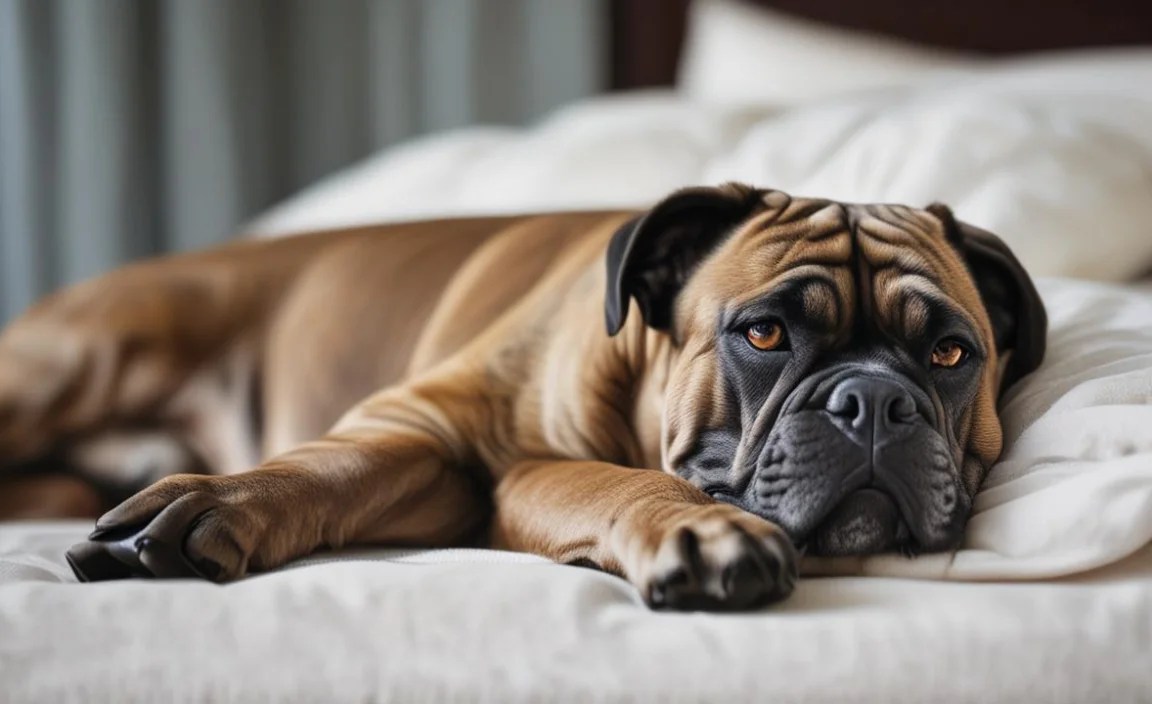
While establishing a routine is key, you might encounter occasional sleep disruptions. Here’s how to address them:
Restlessness and Difficulty Settling
If your Cane Corso seems unable to settle down for sleep, consider these possibilities:
- Insufficient Exercise: Ensure your dog is getting adequate physical and mental stimulation throughout the day. A tired dog is more likely to sleep well. For a Cane Corso, this means daily walks and opportunities for them to use their powerful bodies and minds.
- Anxiety or Stress: Changes in environment, new pets or people, or separation anxiety can disrupt sleep.
- Medical Issues: Pain, discomfort, or gastrointestinal upset can make it hard for a dog to find a comfortable sleeping position.
- Behavioral Training: Sometimes, a dog simply hasn’t learned how to relax and settle on their own.
Solution: Increase daily exercise and mental enrichment. Explore crate training to provide a secure den. If anxiety is suspected, consult with a professional trainer or behaviorist. Always rule out medical causes with your veterinarian.
Nocturnal Barking or Whining
This can be particularly disruptive. It often stems from:
- Need to Potty: Especially common in puppies or older dogs with reduced bladder control.
- Discomfort: As mentioned above, pain can manifest as vocalizations.
- Thirst or Hunger: Ensure water is accessible and meals are appropriately timed.
- Loneliness or Anxiety: Some dogs feel insecure when left alone at night.
- Environmental Triggers: Sounds or sights outside can cause reactivity.
Solution: Ensure a final potty break is taken close to bedtime. Check for access to water. Rule out medical issues. Consider a night light or a piece of your clothing with your scent in their bed for comfort. For separation anxiety, a structured approach to building independence is crucial. If it’s external triggers, consider soundproofing or placing their bed in a quieter part of the house.
Excessive Daytime Sleeping
While naps are normal, sleeping for a majority of the day could indicate:
- Boredom: A lack of stimulation can lead to a dog becoming lethargic.
- Illness: Any decline in energy and increased sleep can be a symptom of illness.
- Poor Sleep Quality at Night: If their nighttime sleep is consistently interrupted, they will be more tired during the day.
Solution: Increase daily exercise and mental stimulation activities, such as puzzle toys, training sessions, or scent games. Consult your veterinarian to investigate any potential health concerns. Evaluate their nighttime sleep environment and routine.
Age-Specific Sleep Needs for Cane Corsos
The sleep requirements for your Cane Corso evolve significantly throughout their life. What’s normal for a puppy will be different for an adult and a senior. It’s important to adapt your expectations and routine accordingly.
Cane Corso Puppies (0-18 months)
Puppies are in a constant state of growth and development, which requires a tremendous amount of sleep. Expect to see your Cane Corso puppy sleeping anywhere from 18 to 20 hours a day. Much of this sleep is crucial for their physical growth, immune system development, and the processing of new information and social cues.
- Sleep Considerations for Puppies:
- Frequent Naps: Puppies have short waking periods followed by long naps.
- Crate Training: A crate can be an excellent tool for a puppy’s sleep, providing a safe, den-like environment.
- Nighttime Potty Breaks: Be prepared for multiple potty breaks during the night and early morning.
- Supervision: When awake, puppies need constant supervision to prevent accidents and ensure they are not getting into trouble.
Adult Cane Corsos (18 months – 7 years)
Once your Cane Corso reaches adulthood, their sleep needs will stabilize. As mentioned, the typical range is 12-14 hours per 24-hour period. This includes their nighttime sleep and their daytime naps. This is when establishing a consistent routine becomes most impactful, as it helps maintain their overall health and good behavior.
- Sleep Considerations for Adults:
- Balanced Routine: Consistent feeding, exercise, training, and bedtime routines are vital.
- Adequate Stimulation: Ensure they get enough physical and mental challenges to prevent boredom and restlessness.
- Monitoring Behavior: Changes in sleep patterns can be early indicators of health or behavioral issues.
Senior Cane Corsos (7+ years)
As your Cane Corso ages, their metabolism slows down, and their energy levels naturally decrease. This often leads to an increase in their sleeping needs, potentially back up to 16-18 hours per day. Furthermore, senior dogs may experience aches and pains associated with aging, such as arthritis, which can make finding a comfortable sleeping position more challenging and necessitate more rest.
- Sleep Considerations for Seniors:
- Comfortable Bedding: Orthopedic beds are almost a necessity to support aging joints.
- Easy Access: Ensure their sleeping area is easily accessible and doesn’t require them to jump or climb excessively.
- Veterinary Care:


