To successfully train a Cane Corso puppy, focus on a nutrient-rich puppy food that supports rapid growth and high energy levels, combined with consistent, positive reinforcement training methods from an early age to build trust and good habits.
Bringing a Cane Corso puppy into your home is an exciting adventure! These magnificent dogs are known for their loyalty, courage, and gentle nature with their families. But like any puppy, they need the right start, especially when it comes to food and training. It can feel overwhelming to figure out exactly what your growing giant needs. You want to make sure you’re feeding them the best and teaching them good manners from day one, but where do you even begin?
This can be a common concern for new Cane Corso owners, as their unique needs require specific attention. Don’t worry, this guide is here to help! We’ll walk through everything you need to know about choosing the perfect puppy food and implementing proven training techniques that will set your Cane Corso up for a happy and well-behaved life. Get ready to build a fantastic bond with your new furry family member!
Choosing the Right Cane Corso Puppy Food

The Cane Corso is a powerful breed that grows rapidly, especially during its first year. Proper nutrition is absolutely critical during this phase. The right food provides the building blocks for strong bones, healthy muscles, a shiny coat, and a robust immune system. For Cane Corso puppies, this means opting for a high-quality kibble specifically formulated for large breeds.
Why Large Breed Puppy Food is Essential
Large breed puppy foods are designed with a specific balance of nutrients to manage their growth rate. They typically contain:
- Controlled Calcium and Phosphorus Levels: Too much of these minerals or an improper ratio can lead to developmental orthopedic diseases like hip and elbow dysplasia, which are concerns for many large breeds.
- Appropriate Calorie Density: To prevent them from growing too quickly, which can also strain developing joints.
- Higher Protein Content (but not excessive): To support muscle development without encouraging overly rapid growth.
- Added Glucosamine and Chondroitin: These are beneficial for joint health, which is particularly important for a breed that will be as substantial as the Cane Corso.
Key Ingredients to Look For
When examining dog food labels, here’s what to prioritize for your Cane Corso puppy:
- Named Meat as the First Ingredient: Look for “chicken,” “lamb,” “beef,” or “fish” as the very first ingredient. This ensures a good source of animal protein.
- Whole Grains or Easily Digestible Carbohydrates: Ingredients like brown rice, oats, or barley provide energy and fiber. Some grain-free options exist, but it’s wise to discuss this with your veterinarian, as some studies have raised concerns regarding certain grain-free diets and heart health in dogs.
- Omega-3 and Omega-6 Fatty Acids: These are vital for healthy skin and a glossy coat, and can help reduce inflammation.
- Vitamins and Minerals: Ensure the food is fortified to meet AAFCO (Association of American Feed Control Officials) standards for puppy growth. You can often find the AAFCO statement on the packaging.
What to Avoid
Steer clear of foods with:
- Artificial Colors, Flavors, and Preservatives: These offer no nutritional value and can sometimes cause sensitivities.
- Generic Meat By-products: While by-products are not inherently bad, “meat by-products” as the first ingredient can indicate lower quality.
- Excessive Fillers: Ingredients like corn, wheat, and soy can be found in lower-quality foods and fill the bag without providing substantial nutrition.
Feeding Guidelines for Cane Corso Puppies

It’s not just about what you feed, but also how much and how often. Consistency is key!
Portion Control is Crucial
Overfeeding can lead to rapid weight gain, which is detrimental to a growing Cane Corso’s skeletal development. Always follow the feeding guidelines on the puppy food bag, but remember these are just recommendations.
- Consult Your Veterinarian: Your vet is the best resource for determining the precise amount of food your puppy needs based on their age, activity level, and individual metabolism.
- Body Condition Score: Learn to assess your puppy’s body condition. You should be able to feel their ribs with a light touch, see a visible waist when viewed from above, and notice an abdominal tuck when viewed from the side. Adjust food portions accordingly.
Feeding Schedule
Puppies have small stomachs and high energy needs, so they require multiple meals throughout the day.
- 8-12 Weeks: 4 meals per day
- 3-6 Months: 3 meals per day
- 6-12 Months: 2 meals per day
- After 1 Year: Transition to 2 meals per day for adult dogs.
It’s best to feed at the same times each day to establish a routine, which also aids in house-training. For more detailed dietary recommendations and to ensure you’re meeting all nutritional requirements, consulting with a veterinary nutritionist or your trusted veterinarian is highly recommended. Websites like the American Animal Hospital Association (AAHA) offer valuable insights into pet nutrition.
Introducing Positive Reinforcement Training
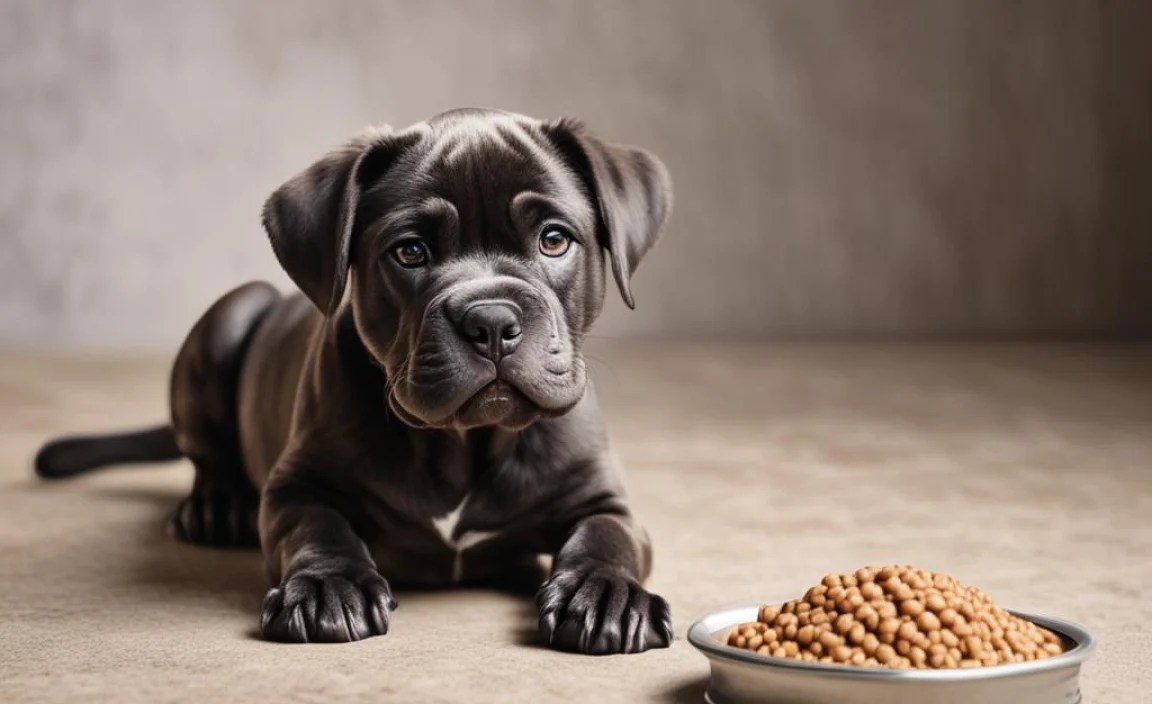
Training your Cane Corso puppy should be a positive and rewarding experience for both of you. Positive reinforcement focuses on rewarding desired behaviors, making them more likely to happen again. This approach builds a strong bond based on trust and clear communication.
The Foundation of Positive Reinforcement
At its core, positive reinforcement means adding something your dog likes after they perform a desired action. This could be a small, high-value treat, praise, or a favorite toy. This makes the behavior more appealing to your puppy.
Essential Training Tools
You don’t need much to get started, but a few key items will make your training sessions smoother:
- High-Value Treats: Small, soft, and extra-tasty treats that your puppy absolutely loves. Think tiny pieces of cheese, cooked chicken, or commercial training treats.
- Leash and Collar/Harness: A comfortable, well-fitting collar or a padded harness is essential for safety and control during walks and training.
- Clicker (Optional): A clicker can be a highly effective marker for precisely identifying the moment your puppy does something right. More on this below.
- Patience and Consistency: These are your most important tools!
Getting Started with Basic Commands
Begin with simple commands that are essential for everyday life and safety.
1. Sit
This is typically the first command puppies learn. It’s a great way to establish impulse control.
- Hold a treat near your puppy’s nose.
- Slowly move the treat up and back over their head. As their head follows the treat, their rear end will naturally lower into a sit.
- The moment their bottom touches the floor, say “Yes!” (or click your clicker) and give them the treat and praise.
- Repeat this several times in short sessions.
- Once they reliably sit when you lure them, start saying the word “Sit” just as they begin to lower themselves.
- Gradually fade the lure, using just your hand motion, then just the word.
2. Come (Recall)
A reliable recall is a lifesaver! Start in a quiet, safe area, like your home or backyard.
- Get down on your puppy’s level, maybe a few feet away.
- Enthusiastically call your puppy’s name followed by “Come!”
- When they run to you, give them lots of praise and a high-value treat.
- Keep it fun and upbeat. Never call your puppy to you for something unpleasant (like a bath or nail trim).
- As they get better, you can gradually increase the distance and introduce mild distractions, always setting them up for success by only calling them when you are confident they will come.
3. Stay
This command teaches impulse control and helps with management.
- Ask your puppy to “Sit.”
- Hold your hand out in front of you, palm facing them, and say “Stay.”
- Wait just one second, then reward with a treat and praise if they remained in place.
- Gradually increase the duration of the “Stay”—one second, then two, then five, and so on.
- Once they can hold a stay for a short period, start taking a step back. If they stay, return, reward. If they move, simply return them to their original spot and try again with a shorter duration or distance.
- Always return to your puppy to reward them; don’t call them out of a stay.
The Power of the Clicker
A clicker is a small device that makes a distinct “click” sound. It’s used as a “marker” to tell your dog precisely when they did the correct behavior.
- Charging the Clicker: First, you need to teach your puppy that the click means a treat is coming. Click the clicker, then immediately give a treat. Do this about 10-20 times for a few short sessions. Your puppy will quickly learn to associate the click with a reward.
- Using the Clicker in Training: When your puppy performs the desired behavior (e.g., sits), click the moment they do it, then give them a treat. The click “freezes” the moment of correct behavior for them. This allows for very precise timing and communication.
For more in-depth training resources, the American Kennel Club (AKC) offers a wealth of information on dog behavior and training techniques.
Socialization: A Crucial Step

For any breed, but especially for a powerful breed like the Cane Corso, early and proper socialization is non-negotiable. It involves positively exposing your puppy to a wide variety of sights, sounds, people, places, and other animals.
Why Socialization Matters for Cane Corsos
Cane Corsos can be naturally reserved or protective. Early socialization helps them develop into confident, well-adjusted dogs who can confidently navigate the world without becoming overly fearful or reactive. It’s about teaching them that new experiences are not inherently scary.
When and How to Socialize
The critical socialization window for puppies is generally between 3 and 16 weeks of age. However, socialization continues throughout a dog’s life.
Puppy Socialization Checklist:
- People: Introduce your puppy to people of all ages, genders, ethnicities, and appearances (e.g., wearing hats, glasses, carrying umbrellas). Ensure these interactions are positive and controlled.
- Environments: Safely expose them to different locations such as parks (once vaccinated), pet-friendly stores, the car, and different surfaces (grass, pavement, gravel).
- Sounds: Gradually introduce them to various noises in a positive way. This can include traffic, vacuums, thunderstorms (played at low volume), doorbells, and crowds.
- Other Dogs: Arrange safe, supervised playdates with healthy, vaccinated, well-behaved adult dogs and puppies in a controlled setting like a puppy class.
- New Objects: Let them sniff skateboards, bikes, strollers, etc., from a safe distance.
Important Note: Always keep socialization experiences positive. If your puppy seems scared, don’t push them. Retreat to a distance where they feel comfortable and reward them for calm behavior. For more on socialization phases, the American Veterinary Medical Association (AVMA) provides excellent guidance.
Potty Training Your Cane Corso Puppy

Cane Corso puppies, like all puppies, require patience and consistency for successful potty training. The goal is to teach them where it’s appropriate to eliminate.
Creating a Routine
A predictable schedule is your best friend in potty training.
- First Thing in the Morning: Take your puppy outside immediately upon waking.
- After Naps: Take them out shortly after waking from any nap.
- After Eating/Drinking: Puppies need to relieve themselves about 15-30 minutes after consuming food or water.
- After Playtime: Energetic play can stimulate the need to go.
- Before Bedtime: Always take them out for a final potty break.
- During the Night (if necessary): Very young puppies may need one or two potty breaks during the night. Set an alarm to avoid accidents in the crates.
The Potty Training Process
- Choose a Spot: Designate a specific area in your yard for potty breaks. Always take your puppy to this same spot.
- Leash Them: Keep your puppy on a leash during potty breaks initially. This helps them focus and prevents them from wandering off.
- Use a Cue Word: As they start to eliminate, softly say a cue word like “Go potty” or “Do your business.”
- Reward Success: The moment they finish, praise them enthusiastically and give them a treat. Make it a party!
- Manage Accidents: If you catch your puppy in the act of having an accident inside, interrupt them with a clap or a sharp “Oops!” and immediately rush them outside to their designated spot. If they finish outside, praise them. If you find an accident later, do not punish your puppy; they won’t understand why they’re being disciplined. Just clean it up thoroughly with an enzymatic cleaner to eliminate odors.
- Crate Training: Crate training can be a valuable tool. Dogs naturally avoid soiling their sleeping area. When used correctly (as a safe den, not a punishment), it helps with housetraining by preventing accidents when you can’t supervise directly.
Crate Training for Cane Corso Puppies
Crate training is a highly effective method for managing your puppy, preventing destructive behavior, and aiding in potty training. A crate should be a safe and comfortable den for your puppy.
Choosing the Right Crate
For a growing Cane Corso, you’ll likely need a large or extra-large crate. Many come with divider panels, allowing you to adjust the size of the space as your puppy grows. This prevents them from using one end as a potty area and another as a sleeping space.
Introducing the Crate
- Make it Inviting: Place comfortable bedding inside and toss in a few treats or a safe chew toy.
- Feed Meals in the Crate: Start by putting their food bowl just inside the door, then gradually move it further back as they become more comfortable.
- Never Force Entry: Allow your puppy to explore the crate on their own terms.
- Short Durations First: Start with closing the door for just a few minutes while you stay nearby. Gradually increase the time.
- Gradually Increase Independence: Once they are comfortable with the door closed for longer periods, you can start leaving the room for short intervals.
A properly introduced crate becomes a safe haven for your dog. It’s important that the crate is never used as a form of punishment.
Common Puppy Training Challenges and Solutions
Even with the best intentions, puppyhood comes with common challenges. Recognizing them and having solutions ready can make a big difference.
Biting and Nipping
Puppy nipping is normal exploration behavior or play. The key is to teach them bite inhibition—how to control the pressure of their mouth.
- Yelp: When your puppy nips too hard, let out a sharp, high-pitched “Ouch!” or “Yelp!” This mimics how littermates might react.
- Withdraw Attention: Immediately stop playing and walk away for about 20-30 seconds. This teaches them that hard bites end the fun.
- Provide Appropriate Chew Toys: Offer plenty of interesting and safe chew toys to redirect their chewing behavior.
- Avoid Rough Play with Hands: Don’t tease your puppy with your hands or fingers; always use toys for play.
Jumping Up
Puppies often jump to greet people, especially when excited.
- Ignore Jumping: When your puppy jumps, turn your back or step away. Do not make eye contact or speak to them.
- Reward Calmness: The moment all four paws are on the floor, offer praise and attention.
- Teach an Alternative Behavior: Train your puppy to “Sit” to greet. Reward them with attention and praise when they sit politely.


