Yes, a Cane Corso can absolutely thrive in an apartment with the right exercise and enrichment strategies! Proper physical and mental stimulation are key to ensuring your powerful Cane Corso is a happy, well-behaved apartment dweller.
Living with a majestic Cane Corso is a rewarding experience, but if you share your home with one in an apartment, you might wonder if they can truly be content without a sprawling yard. It’s a common concern for many aspiring or current Cane Corso owners in urban settings.
The good news is that a large living space isn’t the most crucial factor for these intelligent dogs; it’s consistent, engaging exercise and mental stimulation that make all the difference. This guide will walk you through everything you need to know to ensure your Cane Corso enjoys a happy and fulfilling life, even in an apartment.
Understanding the Cane Corso’s Exercise Needs

Cane Corsos are naturally athletic and were originally bred as guard dogs and estate protectors. This heritage means they have a good amount of energy and require regular physical activity to stay healthy and prevent boredom-related behaviors. While they aren’t hyperactive dogs that need to run for hours on end, they do require dedicated exercise sessions each day. Without adequate outlets for their energy, they can become restless, destructive, or anxious, which is especially problematic in smaller living spaces.
Their exercise needs aren’t just about burning off steam; they are also crucial for mental well-being. A tired dog is a good dog, and this holds true for apartment-dwelling Corsos. Providing varied activities will keep their minds sharp and engaged, preventing them from finding their own, potentially undesirable, entertainment.
Key Factors for Apartment Exercise
- Consistency: Daily exercise is non-negotiable.
- Intensity: Aim for moderate to vigorous activity.
- Mental Stimulation: Puzzle toys and training are vital.
- Owner Involvement: Your participation is key to their well-being.
- Breed Traits: Understand their need for purpose and companionship.
Must-Have Exercises for Apartment Cane Corsos
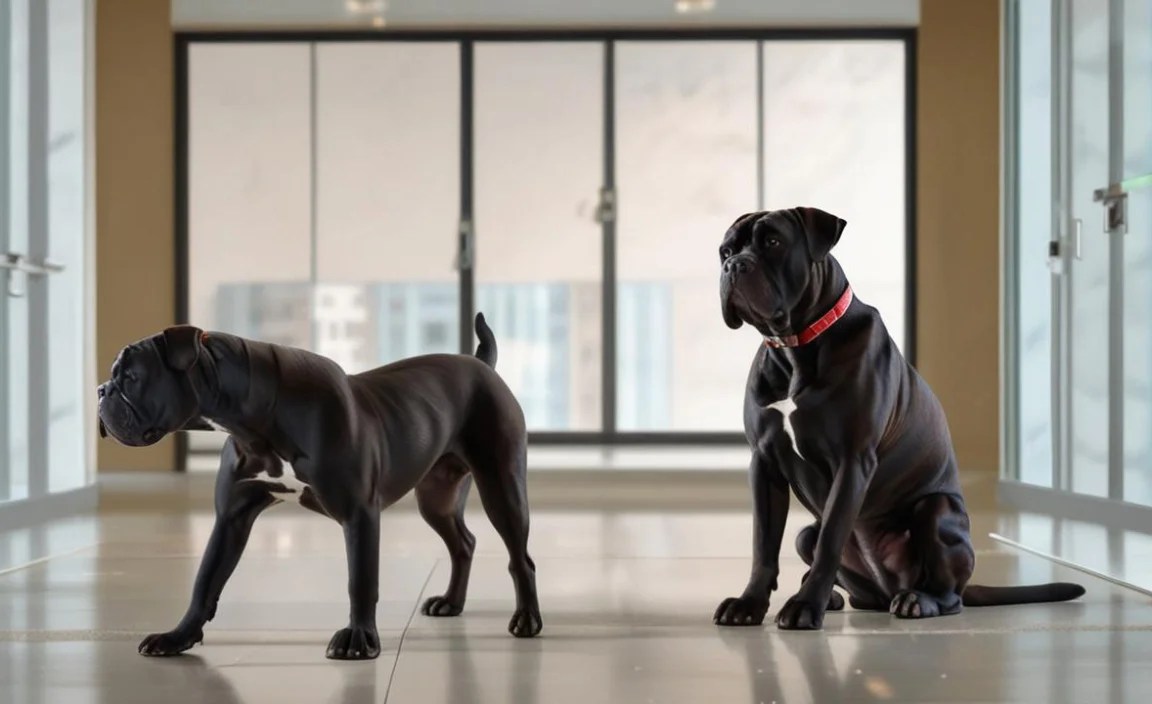
The cornerstone of keeping a Cane Corso happy in an apartment is a well-structured exercise routine. This routine should incorporate a mix of physical exertion and mental challenges.
1. Leashed Walks: The Foundation
Daily leashed walks are the most fundamental form of exercise for an apartment-dwelling Cane Corso. Aim for at least two brisk walks per day, each lasting 30-60 minutes. These walks aren’t just for eliminations; they are opportunities for exploration, socialization (if safe and controlled), and physical exertion.
- Morning Walk: Start the day with a good, long walk to burn off morning energy and satisfy their need to explore new scents.
- Evening Walk: A final walk before bedtime helps them settle down for the night.
- Route Variation: Change your walking routes regularly to expose your Corso to different sights and smells, keeping things interesting.
- Pace: Maintain a brisk pace that gets their heart rate up. This isn’t a leisurely stroll; it’s an active outing.
When walking a strong breed like the Cane Corso, proper equipment is essential. A sturdy, well-fitting harness (front-clip harnesses can help with pulling) and a durable, non-retractable leash are recommended. For additional control and training reinforcement, consider a head halter or a no-pull leash, but always introduce these tools gradually and positively.
It’s also important to prioritize safety. Always ensure your dog is under control and aware of their surroundings. Be mindful of other dogs, people, and potential hazards in the urban environment. Resource: For guidance on leash training and walking techniques, the American Kennel Club (AKC) offers valuable resources: AKC Leash Training Tips.
2. Indoor Play and Training Sessions
When outdoor conditions are unfavorable, or you need to supplement walks, indoor activities are invaluable. These sessions combine physical movement with mental engagement, which is equally important for the Cane Corso.
- Fetch (Indoor Version): Adapt fetch for indoor spaces. Use soft toys and toss them short distances down a hallway or in a room with ample space. Keep sessions short and fun.
- Tug-of-War: A great way to engage your dog physically and mentally. Ensure you have clear rules: “drop it” must be obeyed, and the game stops if your dog becomes overstimulated. Use a durable rope toy designed for strong chewers.
- Stair Sprints (Use with Caution): If you have stairs in your apartment or building, short bursts of controlled “sprint” up and down a few stairs can be good exercise. Always supervise closely and ensure your dog is physically sound for this, avoiding for puppies or elderly dogs.
- Hide-and-Seek: Have your dog stay in one room while you hide. Call them to find you, rewarding them with praise or a small treat when they succeed. This is a fantastic mental workout.
3. Mental Stimulation: The Brain Game
Cane Corsos are intelligent and need to be mentally challenged. Boredom can lead to destructive behavior, so investing in mental enrichment is crucial for apartment living.
- Puzzle Feeders: Instead of feeding meals in a bowl, use puzzle toys or slow feeders. This makes mealtime a stimulating activity that requires problem-solving skills. Examples include treat balls or interactive food dispensers.
- Scent Games: Hide treats around the apartment and encourage your dog to find them using their nose. This taps into their natural scenting abilities.
- Training Sessions: Short, daily training sessions (5-10 minutes) reinforce good behavior and teach new commands. This is a powerful way to engage their mind. Focus on positive reinforcement methods.
- Chew Toys: Provide a variety of durable chew toys to satisfy their natural urge to chew and help keep them occupied when you can’t actively engage them. Look for toys made from strong, non-toxic materials.
4. Occasional Outings to Dog Parks and Eventual Off-Leash Exploration (with caution)
While not a daily necessity for apartment living, occasional visits to a well-maintained and carefully chosen dog park can provide valuable socialization and off-leash exercise. However, this must be approached with extreme caution for any breed, and especially for a powerful dog like the Cane Corso, who can be intimidating or misread by others. Ensure your dog has solid obedience training and is reliable around other dogs before attempting this.
- Assess the Environment: Observe the dog park dynamics. Is it calm, or is there a lot of aggression? Are the owners attentive?
- Controlled Introductions: Enter calmly and allow your dog to observe from a distance first.
- Supervision is Key: Never leave your Cane Corso unsupervised. Be ready to intervene calmly if any issues arise.
- Off-Leash Parks with Secure Fencing: If available, these offer a safer environment for off-leash running than open fields.
For truly off-leash experiences, consider secure, private dog parks or fenced farms where you have exclusive access and can ensure safety. The ability to run free in a controlled, safe environment is incredibly beneficial for any dog, including apartment-dwelling Cane Corsos.
Structuring Your Cane Corso’s Apartment Exercise Routine

Creating a daily schedule helps ensure your Cane Corso’s exercise needs are consistently met. Here’s a sample structure you can adapt:
Daily Schedule Example
Morning (6:00 AM – 7:00 AM):
- 30-45 minute brisk walk: Focus on covering distance and exploring new scents.
- 5-10 minute brief training review: Reinforce commands from the previous day.
Midday (if possible to go home or have a dog walker):
- 15-20 minute potty break and short play session: A quick play with a favorite toy or a short game of fetch down the hallway to break up the day.
Evening (5:30 PM – 7:00 PM):
- 45-60 minute walk or strenuous play session: This can be another long walk, an indoor vigorous play session (tug, indoor fetch), or a trip to an enclosed park if time and energy permit.
- 10-15 minute puzzle toy/mental stimulation: A puzzle feeder for dinner or a dedicated scent game.
- 10-15 minute training session: Work on new tricks or refine obedience commands.
Before Bedtime:
- 10-15 minute gentle walk: A short, calmer walk to allow for final potty needs and a chance to wind down.
This structure provides a good balance of physical and mental exercise throughout the day. Remember to adjust the duration and intensity based on your dog’s age, health, and individual energy levels. Puppies and senior dogs will have different needs than adult Corsos.
Essential Gear for Apartment Cane Corso Exercise

The right equipment can make exercising your Cane Corso safer, more effective, and more enjoyable.
Recommended Gear Checklist
- Durable, Comfortable Harness: A well-fitting harness, preferably with a front-clip option, can help manage pulling. Look for padded options for comfort.
- Sturdy Leash: A 6-foot, non-retractable leash made of strong material like nylon or leather is ideal.
- High-Value Treats: Small, tasty rewards for training and positive reinforcement.
- Agility/Tug Toys: Durable rope toys, rubber balls, and other interactive toys for play.
- Puzzle Feeders and Treat-Dispensing Toys: For mental stimulation during mealtimes.
- Long-Lasting Chew Toys: Examples include Nylabones or durable rubber chew toys to keep them occupied during downtime.
- Poop Bags: Always be prepared for walks!
- Reflective Gear: For walks in low light conditions to ensure visibility.
- Water Bottle and Collapsible Bowl: For longer outings.
Choosing toys that are specifically designed for strong chewers is important to prevent injury or accidental ingestion of small parts. Brands like Kong (Extra-Large and Extreme sizes) and West Paw are often recommended for powerful breeds.
Important Considerations for Powerhouse Breeds in Small Spaces
Cane Corsos are powerful dogs, and their strength requires responsible management, especially in an apartment setting.
Safety First: Managing Strength and Energy
- Leadership and Structure: Establish clear boundaries and rules. Your Cane Corso needs to understand their place in the family hierarchy, with you as the confident leader.
- Mouthy Behavior: Young Cane Corsos can be mouthy. Redirect this behavior with appropriate chew toys during play sessions and training.
- Barking Management: While not typically excessive barkers, Corsos will alert to perceived threats. Work on “quiet” commands and address triggers that cause unnecessary barking.
- Socialization: Early and ongoing positive socialization is critical for Cane Corsos. Expose them to various people, dogs (calm and well-behaved), and environments in a controlled manner.
For owners new to large breeds or defensive-minded dogs, professional guidance can be invaluable. Consider enrolling in obedience classes that focus on positive reinforcement and build confidence in both you and your dog. Resources like the Certification Council for Professional Dog Trainers (CCPDT) can help you find qualified professionals in your area: Find a Certified Dog Trainer.
Harness vs. Collar for Cane Corsos
For large, strong breeds like the Cane Corso, a harness is generally the preferred choice for walking. Collars can place pressure directly on the trachea, which can be an issue for any dog, but especially for a breed that can pull with significant force or is prone to respiratory issues. A well-fitted harness distributes pressure across the chest and back, offering better control and comfort.
Types of Harnesses to Consider
There are several types of harnesses that can be beneficial:
| Harness Type | Description | Pros for Cane Corso | Cons for Cane Corso |
|---|---|---|---|
| Front-Clip Harness | A leash attachment point is on the dog’s chest. | Helps redirect pulling by turning the dog towards you. Excellent for strong pullers. Provides good control without airway pressure. | May require some adjustment to ensure a proper fit and prevent chafing. Some dogs can learn to escape certain front-clip designs if not fitted correctly. |
| Back-Clip Harness (Standard) | Leash attaches to a ring on the dog’s back. | Comfortable for dogs that don’t pull heavily. Easy to put on. | Less effective for managing strong pullers. Offers less direct control over their forward momentum. |
| Head Halter/Halti/Gentle Leader | Fits around the dog’s muzzle and behind the ears; leash attaches under the chin. | Provides excellent control by guiding the head, which naturally influences the body’s direction. Very effective for strong dogs. | Requires careful introduction and positive reinforcement to ensure the dog accepts it. Not all dogs are comfortable with muzzle restraints. Can be a good tool for handlers who struggle with leash control. |
Always ensure any harness is fitted correctly to prevent chafing or the dog slipping out. Measure your dog carefully before purchasing. A proper fit is paramount for safety and comfort.
Cane Corso Apartment Living: Pros and Cons
While a Cane Corso can live successfully in an apartment, it’s important to understand the potential challenges and rewards.
Balancing the Lifestyle
| Advantages of Apartment Living with a Cane Corso | Challenges of Apartment Living with a Cane Corso |
|---|---|
| Close Bonding: You develop a very close bond as you are their primary source of activity and companionship. | Space Constraints: Limited indoor space for them to move freely. |
| Routine Reinforcement: The structured nature of apartment living often necessitates a routine, which is beneficial for dogs. | Noise Concerns: Barking can be an issue, potentially bothering neighbors. Requires diligent training. |
| Increased Owner Involvement: Requires you to be more proactive with exercise and mental stimulation, leading to a well-adjusted dog. | Potty Breaks and Outdoor Access: Needing to go outside for every potty break, regardless of weather or time. |
| Security: Their presence can provide a sense of security. | Damage Potential: A bored or under-exercised Cane Corso can cause significant damage to furniture or apartment property. |
| Supervised Outings: Leads to more directed and intentional outdoor experiences. | Requires Significant Time Commitment: Absolutely necessitates dedicated time for walks, training, and play, as the apartment itself cannot fulfill these needs. |
It’s clear that while challenges exist, they are manageable with dedication and the right approach. The “proven” aspect comes from the owner’s commitment to providing a rich, active life, both physically and mentally, for their Cane Corso.

Micheal L Garcia


