A Cane Corso exercise crate is a vital tool for managing your giant breed’s energy and ensuring their safety. It provides a secure den, aids in house training, and offers peace of mind when you can’t directly supervise your powerful pup.
Getting a big dog like a Cane Corso is an exciting adventure! These magnificent giants are known for their loyalty and protective nature. But with their size and energy comes a unique set of needs, and one of those is proper management of their “zoomie” times and downtime. It can feel a bit overwhelming at first, especially if you’re new to giant breeds. You might wonder how to channel all that energy safely and effectively, or how to ensure your pup has a safe space when you’re busy. Don’t worry, this is a common concern for new Cane Corso owners! We’re going to walk through exactly why an exercise crate is such a game-changer for your big friend and how to introduce it to them.
Why Your Cane Corso Needs an Exercise Crate

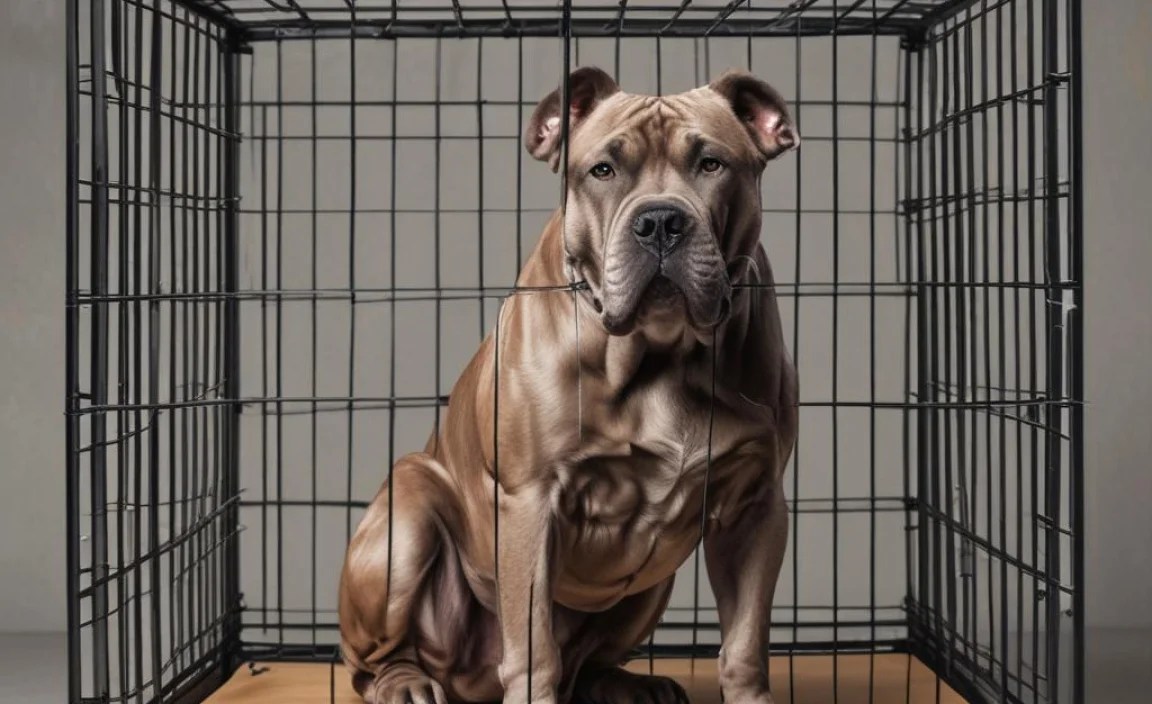
Your Cane Corso is a powerful and energetic breed. While their strength and spirit are part of what makes them so special, it also means they require specific solutions for managing their space and energy. An exercise crate isn’t about confinement; it’s about providing structure, safety, and a secure den for your dog. Think of it as their personal sanctuary, a place where they can relax and feel safe.
The Benefits of a Cane Corso Exercise Crate
Using a crate, especially one designed for exercise and larger breeds, offers a multitude of benefits. It’s more than just a box; it’s a tool for building a well-behaved, confident dog.
Safety First: When you can’t supervise your Cane Corso, especially during their puppy and adolescent phases, they can get into trouble. Chewing on furniture, digging, or even accidental injuries can happen. A crate provides a safe environment, preventing destructive behaviors and keeping them out of harm’s way.
House Training Aid: Crates are incredibly effective for house training. Dogs naturally avoid soiling their sleeping area. By confining them to a crate when unsupervised, you significantly reduce the chances of accidents in the house and help establish a regular potty routine.
Reduces Separation Anxiety: While it might seem counterintuitive, a properly introduced crate can actually help your dog feel more secure when you’re not around. It provides a familiar, safe space that reminds them of their den. This can reduce anxiety and barking when left alone.
Travel Companion: A sturdy crate can make car travel much safer and more comfortable for your Cane Corso. It prevents them from roaming freely in the vehicle, which can be a distraction to the driver and dangerous in case of sudden stops.
A Den for Relaxation: Dogs are den animals by nature. A crate, when made comfortable and appealing, becomes their safe haven—a place they can retreat to for peace and quiet, especially in a busy household.
Manages High Energy: Cane Corsos are working dogs with substantial energy reserves. An exercise crate, particularly models designed with more space, can provide them with a secure area to simply be without needing constant supervision or the risk of destructive chewing when bored.
Understanding “Exercise Crate” vs. Standard Crate
When we talk about an “exercise crate” for a Cane Corso, we’re often referring to a crate that is exceptionally large or a specialized heavy-duty model. Traditional crates might not be robust enough for a strong, determined giant breed, or large enough to allow for a bit of movement and comfort beyond just lying down.
A standard crate is primarily for containment for short periods, like during house training or when you’re home to supervise. An exercise crate for a breed like the Cane Corso needs to be extra sturdy, perhaps made of heavy-gauge wire or durable plastic, and offer ample space for them to stand up, turn around, and lie down comfortably, even when they have bursts of pent-up energy they need to release without you directly engaging them. It’s about providing a robust, secure space that respects their size and strength.
Choosing the Right Cane Corso Exercise Crate


Selecting the perfect crate for your Cane Corso is crucial. It needs to be strong, safe, and the right size. A crate that’s too small will be uncomfortable and ineffective for house training. A crate that’s too large can actually encourage house-soiling, as your dog may use one end as a potty area and the other as a sleeping space. However, for an “exercise” capacity, you do want a bit more room than the absolute minimum.
Size Matters: The Golden Rule
The general rule of thumb for crate sizing is that your dog should be able to:
Stand up fully without their head touching the top.
Turn around comfortably in a full circle.
Lie down in a natural, stretched-out position.
For a Cane Corso, this translates to a very large crate. Expect to purchase a crate that is at least 42 inches long by 28 inches wide, and often up to 48 inches long. Many owners find that large wire crates or heavy-duty metal crates are their best bet. Some even opt for modular dog kennels that can be configured to offer a large, safe space.
Look for crates specifically rated for giant breeds or breeds with similar temperaments and sizes, like Great Danes or Mastiffs. The American Kennel Club recommends ensuring a crate is large enough for your dog to stand, turn, and lie down in, which is especially important for larger breeds.
Material and Durability: Built for a Giant
Cane Corsos are strong dogs. A flimsy wire crate can be easily bent or broken by a determined dog. For this reason, focusing on durability is paramount.
Heavy-Gauge Wire Crates: These are popular for their ventilation and visibility. Ensure the gauge of the wire is thick and the welds are strong. Look for features like secure latches that can’t be easily nudged open.
Heavy-Duty Metal or Bar Crates: Made from thick steel bars, these crates offer superior strength and security. They are often more expensive but provide excellent peace of mind for owners of powerful breeds. They are more akin to a mini-kennel and provide excellent airflow.
Solid Polymer Crates: Some heavy-duty plastic crates are designed for travel and offer good security. However, ensure there’s adequate ventilation, as they can get warm. They are often preferred for travel due to their durability and ease of cleaning.
Chain Link or Welded Steel Kennels: For ultimate security and space, especially if you’re looking for something that truly functions as an exercise area, a larger welded steel kennel or a robust chain-link dog run with a secure door might be the best option. These are often used for outdoor containment but can be adapted for indoor use with appropriate flooring.
A Note on Ventilation and Visibility
While durability is key, don’t sacrifice ventilation and visibility entirely, especially if the crate will be used for extended periods or in warmer climates. Good airflow prevents overheating, and being able to see out can reduce anxiety for some dogs.
Key Features to Look For
When shopping for a Cane Corso exercise crate, keep these features in mind:
Secure Latches: Latches should be strong and not easily manipulated by a clever paw or nose. Double-latch systems are a plus.
Solid Floor: A removable, easy-to-clean solid floor is essential. Grates can be uncomfortable for big paws and may pose a risk for smaller limbs if the spacing is wrong.
Ease of Assembly and Cleaning: You’ll want a crate that’s straightforward to put together and, more importantly, easy to wipe down and sanitize.
Portability (Optional): If you plan to travel, consider how easy the crate is to move or disassemble. However, for an “exercise” crate primarily used at home, prioritize sturdiness over portability.
Setting Up Your Cane Corso’s Crate


Once you have the perfect crate, the next step is to make it a positive and inviting space for your Cane Corso. This isn’t just about putting the crate in a corner; it’s about creating a comfortable den that they’ll learn to love.
Location, Location, Location
Where you place the crate in your home can significantly impact how your dog perceives it.
In a High-Traffic Area: During the day, place the crate in a room where there is some activity, like the living room. This allows your dog to feel part of the family and not isolated, which can reduce anxiety.
For Sleep: At night, many owners prefer to move the crate to their bedroom. This further reinforces the idea that it’s a safe, personal space and allows you to hear if your dog needs to go out.
Avoid Drafty or Hot Spots: Don’t place the crate near a drafty window, a heating vent, or in direct sunlight that can make it uncomfortably hot.
Making it Cozy and Inviting
The inside of the crate should feel like a luxurious retreat.
Comfortable Bedding: Use soft, durable bedding that your dog can’t easily destroy. Washable pads or thick, sturdy dog beds are ideal. Ensure there are no loose threads they could chew and ingest.
Safe Chew Toys: Provide a few durable, safe chew toys inside the crate. This gives your dog something appropriate to do and can help ease boredom and anxiety. Avoid anything that can be easily broken into small pieces.
Water Bowl (Optional): For longer periods, a spill-proof water bowl can be attached to the crate door. However, for short periods or during the initial house-training phase, it might be better to omit it to prevent unnecessary accidents.
Introducing Your Cane Corso to the Crate


This is perhaps the most crucial step. A positive introduction will determine your dog’s long-term feelings about their crate. The goal is to make the crate a place of comfort, not punishment.
Step-by-Step Crate Introduction
1. Make it Rewarding: Start by simply leaving the crate door open and tossing high-value treats or favorite toys inside. Let your dog explore and enter the crate on their own terms. Don’t force them in!
2. Short Stays: Once your dog is comfortable entering the crate, start closing the door for very short periods (a few seconds to a minute) while you are still present. Give them a treat, open the door, and let them come out.
3. Gradual Increase in Time: Slowly increase the duration the door is closed. Aim for a few minutes, then 5 minutes, 10 minutes, and so on. Always ensure your dog remains calm. If they start to get anxious, back off to a shorter duration.
4. Introduce Food: Feed your Cane Corso their meals inside the crate with the door open at first, then closed once they are comfortable eating inside. This associates the crate with positive experiences.
5. Brief Departures: Once they are calm with the door closed for longer periods, start leaving the room for very short durations (a minute or two). Gradually increase this time. Always return before your dog becomes distressed.
6. Overnight Stays: When your dog is comfortable spending time in the crate while you are home and during short absences, you can transition to overnight confinement.
Tips for Success
Never Use the Crate for Punishment: This is vital. If the crate is associated with being sent there for misbehaving, your dog will develop a negative association with it.
Be Patient: Every dog learns at their own pace. Some Cane Corsos might take to the crate immediately, while others may need more time and gentle encouragement.
Recognize Signs of Distress: Whining or barking initially is normal. However, persistent howling, digging, or destructive behavior indicates your dog is too stressed. If this happens, remove them from the crate and go back to shorter durations.
Provide Mental and Physical Exercise: A tired dog is more likely to settle in their crate. Ensure your Cane Corso gets adequate exercise before crate training sessions.
Cane Corso Exercise Crate Usage: Best Practices
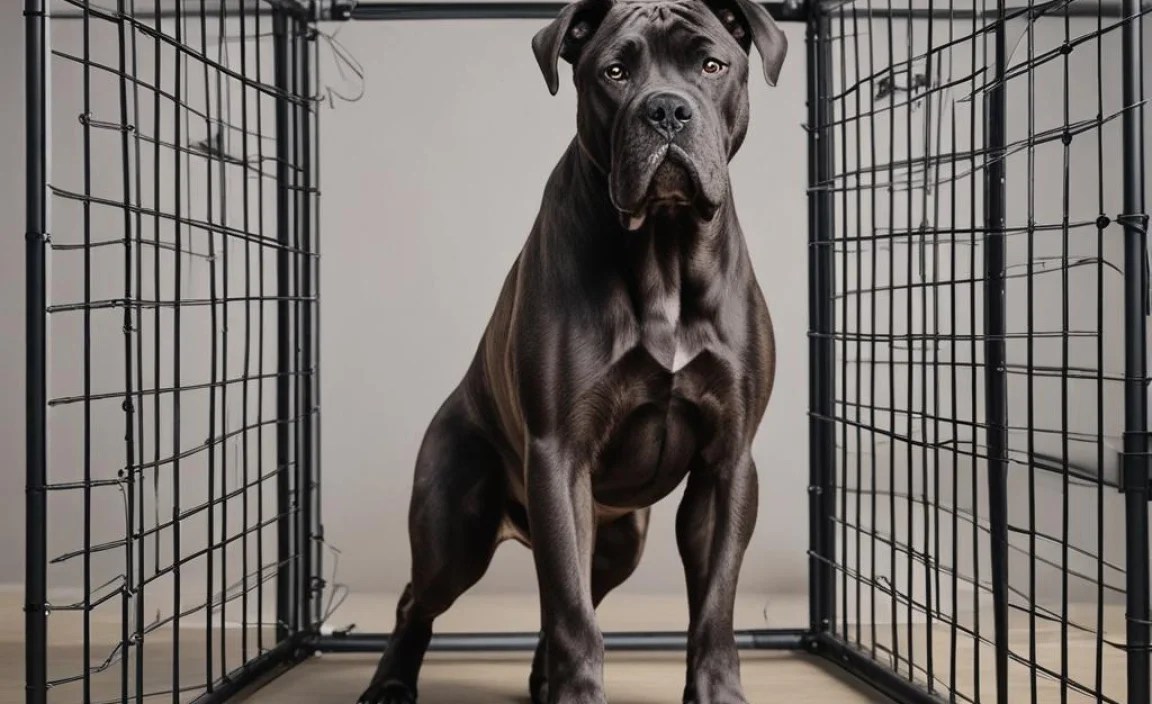
Once your Cane Corso is crate-trained, how do you use the exercise crate effectively? It’s about balance and understanding your dog’s needs.
When to Use the Crate
House Training: As mentioned, for unsupervised times when you are starting to train them to be housebroken.
During Meals: If your dog is a fast eater or prone to resource guarding, feeding them in their crate can be a safe way to manage this.
When You’re Away: For short to moderate periods when you cannot supervise your dog directly. Aim to keep unsupervised crate time to a reasonable maximum (e.g., 4-6 hours, depending on age and individual needs).
Rest Periods During the Day: If your Cane Corso is recovering from an injury or needs enforced rest, the crate can be a good option.
Travel: For safe transport in vehicles.
How Long is Too Long?
This is a critical question. Your Cane Corso is a living, breathing animal with emotional and physical needs. A general guideline for adult dogs is that they can be crated for a roughly equivalent number of hours to their age in months, up to a maximum of 8 hours. For puppies, it’s much shorter.
Puppies (under 6 months): Generally, no more than 1-2 hours at a time, with frequent potty breaks.
Adult Dogs: Ideally, no more than 4-6 hours at a time, with breaks for potty and exercise.
Extended Absences: If you need to be away for longer than 6-8 hours, consider arranging for a dog walker, a pet sitter, or doggy daycare.
The Humane Society of the United States offers excellent guidelines on preventing separation anxiety and proper crate use, emphasizing that crates should never be used for punishment and dogs should not be left crated for excessive periods. They state that “a dog’s individual needs, age, and health must be considered” when determining crate duration.
Integrating Crate Time with Exercise and Play
The crate is a tool for managed rest and safety, not a substitute for proper exercise and interaction. A bored or under-exercised Cane Corso is more likely to become anxious or destructive when out of the crate, and may even develop negative associations with it.
Pre-Crate Exercise: Always ensure your Cane Corso has had sufficient physical and mental stimulation before you crate them, especially for longer periods. This will help them settle down more easily.
Post-Crate Playtime: When you release your dog from the crate, engage them! This could be a walk, a training session, or a fun game of fetch. This reinforces the idea that coming out of the crate leads to good things.
“Free Time” Out of the Crate: Balance crate time with plenty of supervised time where your dog can move freely around the house and interact with you.
When a Standard Crate Isn’t Enough: The Exercise Crate Concept
For breeds as substantial and powerful as the Cane Corso, the term “exercise crate” often implies a need for more than just a basic enclosure. It hints at a desire for a space that’s robust enough to handle their strength and large enough to allow for a bit more movement, even when under supervision.
Consider a scenario: you’re working from home, and your Cane Corso puppy is in its teething phase. A standard wire crate might be too confining for them to truly get their wiggles out safely, leading to frustration. An “exercise crate” in this context might be a larger, heavier-duty wire crate with more space, or a modular playpen attached to a den-style crate. This allows them to stand, turn, and even have a small “exercise zone” within their secure area, preventing boredom-induced destructive behavior.
Heavy-Duty Options for Strong Dogs
You might hear terms like “impact-resistant crates” or “heavy-duty dog kennels.” These are often made with thicker gauge metal, reinforced welding, and secure locking mechanisms designed to withstand the force of larger, more determined dogs.
Example: Wire Crate vs. Heavy-Duty Metal Crate
| Feature | Standard Wire Crate | Heavy-Duty Metal/Bar Crate |
| :—————- | :———————————————— | :————————————————– |
| Durability | Good for most breeds, may be bent/damaged by strong dogs. | Excellent; designed to withstand significant force. |
| Space | Size varies, but can be restrictive for giant breeds. | Typically larger and more accommodating. |
| Ventilation | Excellent | Excellent |
| Visibility | Excellent | Excellent |
| Security | Good latches, but may not deter determined escape artists. | Superior latches, reinforced construction deters escape. |
| Weight | Lighter, easier to move. | Heavier, less portable. |
| Cost | Lower to moderate. | Moderate to high. |
| Best For | Puppies, smaller breeds, short-term containment. | Large, strong breeds, long-term containment, peace of mind. |
Many owners of giant breeds find that a heavy-duty metal crate or a modular kennel sy


