Quick Summary
Maintaining the correct Cane Corso exercise weight is essential for their health and a well-behaved dog. This guide provides proven training methods and practical tips to ensure your Cane Corso stays fit and obedient through appropriate exercise.
Hey there, fellow dog lovers! Are you wondering how much exercise your magnificent Cane Corso really needs, and how it ties into their weight and training? It’s a common puzzle for owners of this powerful breed, and getting it right can make a world of difference in their well-being and your daily life. Don’t worry, you’re not alone, and I’m here to help simplify this. We’ll walk through essential training and exercise strategies step-by-step, so you can feel confident you’re giving your Cane Corso the best. Let’s dive into how to keep your gentle giant healthy, happy, and well-behaved!
Understanding the Cane Corso: More Than Just a Big Dog

Cane Corsos are impressive dogs. They are known for their muscular build, their loyalty, and their protective nature. These dogs were originally bred in Italy as guard dogs and farm workers, which means they have a natural athleticism and a strong work ethic. Because of their size and strength, proper exercise and weight management are not just about looks; they are crucial for their physical health and overall temperament. A well-exercised Cane Corso is less likely to develop behavioral issues and more likely to be a calm, confident companion.
Their exercise needs are significant but different from many other breeds. They require a balance of physical exertion and mental stimulation. Without enough activity, they can become bored, leading to destructive behaviors or weight gain. Conversely, over-exercising, especially in younger dogs, can lead to joint problems. Finding that sweet spot is key, and it starts with understanding their exercise requirements and how they influence their weight and obedience training.
Why Cane Corso Exercise Weight is Crucial

The connection between a Cane Corso’s exercise and their weight is direct and impactful. Excess weight puts tremendous strain on their joints, particularly their hips and elbows, which are already areas prone to issues like hip dysplasia. This strain can lead to:
- Increased risk of osteoarthritis
- Reduced mobility and agility
- Longer recovery times from injuries
- Heart and lung strain
- A shorter overall lifespan
Beyond the physical, a sedentary lifestyle can also lead to a bored and restless dog. This boredom often manifests as undesirable behaviors like excessive barking, chewing, digging, or even aggression, especially in a breed with natural guarding instincts. Consistent, appropriate exercise helps channel their energy constructively, making them calmer and more receptive to training. Think of it as burning off excess energy so they can focus on learning and responding to commands. This is where the “obedience training” aspect comes in – a tired dog is an obedient dog!
Assessing Your Cane Corso’s Ideal Weight

Determining the ideal weight for a Cane Corso isn’t an exact science with a single number, as it depends on age, sex, build, and musculature. However, there are key indicators you can use to assess if your dog is at a healthy weight:
Body Condition Score (BCS)
The most effective way to gauge your dog’s weight is by using a Body Condition Score (BCS) chart. This is a visual and manual assessment that veterinarians use. A common scale ranges from 1 (severely underweight) to 9 (severely overweight). For a healthy dog, you’re aiming for a BCS of 4 or 5.
Here’s what to look for in a dog with a BCS of 4 or 5:
- Ribs: You should be able to easily feel your dog’s ribs under a thin layer of fat but not see them overtly.
- Waist: When viewed from above, your dog should have a visible waistline that tucks in behind the ribs.
- Abdomen: When viewed from the side, there should be a noticeable tuck-up of the abdomen, meaning the belly slopes upward from the rib cage towards the hindquarters.
You can find excellent visual BCS charts online from reputable sources like the VetFolio Canine Body Condition Score Chart, which can help you pinpoint your dog’s current condition.
Consulting Your Veterinarian
Your veterinarian is your best resource for determining your specific Cane Corso’s ideal weight. They can assess your dog’s individual build, muscle mass, and overall health. They will provide a target weight range and can offer tailored advice on diet and exercise plans. Regular vet check-ups are essential, especially for monitoring growth in puppies and maintaining health in adult dogs.
Essential Cane Corso Exercise Regimens
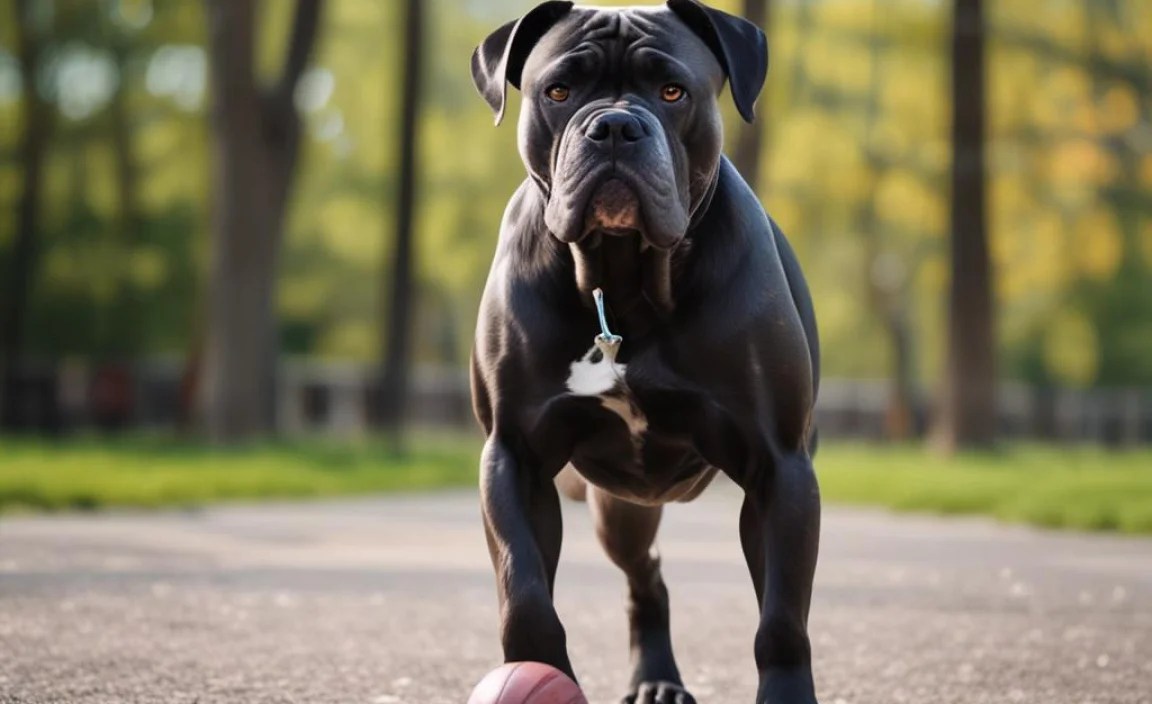
Cane Corsos are not typically high-strung, but they do need consistent, quality exercise to thrive. The goal is to provide enough physical and mental stimulation to keep them fit and happy without overdoing it, especially during their developmental stages.
Puppy Exercise (Under 12-18 Months)
Puppies are growing rapidly, and their bones and joints are still developing. Over-exercising them can lead to long-term joint issues.
- Leash Walks: Short, frequent leash walks are ideal. A common guideline is 5 minutes of structured walking per limb per day. For a 4-month-old puppy, this means about 20 minutes total per day, split into a few short outings.
- Free Play: Allow plenty of safe, supervised free play in a securely fenced yard. This allows them to move at their own pace and build stamina naturally.
- Socialization: Puppy socialization classes are excellent for mental stimulation and learning to interact safely with other dogs and people.
- Avoid High-Impact Activities: No long-distance running, jumping from heights, or strenuous games of fetch on hard surfaces until they are fully grown.
Adult Cane Corso Exercise (Over 18 Months)
Once your Cane Corso is physically mature, their exercise needs increase. The focus shifts to maintaining muscle tone, cardiovascular health, and mental engagement.
Daily Routine:
- Structured Walks: Aim for at least two walks per day, each lasting 30-60 minutes. These walks should be brisk enough to get their heart rate up.
- Cardio/Endurance: Incorporate activities like jogging alongside you (if your dog is fit and healthy), hiking, or swimming. These are excellent for calorie burning and muscle building.
- Mental Stimulation: This is just as important as physical exercise. Include:
- Training Sessions: Short, consistent obedience training sessions (5-15 minutes) several times a day.
- Puzzle Toys: Use food-dispensing toys to make them work for their meals.
- Nose Work/Scent Games: Hiding treats or toys for them to find engages their natural instincts.
- New Environments: Visiting new parks, trails, or dog-friendly places provides novel experiences that tire them mentally.
- Plays: Gentle games of fetch or tug-of-war can be great, but monitor your dog for fatigue and ensure they don’t become overly aroused.
Senior Cane Corso Exercise
As your Cane Corso ages, their exercise needs will change. The focus should be on maintaining mobility and comfort.
- Shorter, more frequent walks at a relaxed pace.
- Gentle swimming can be excellent for joint health.
- Continue with short, positive reinforcement training sessions.
- Listen to your dog’s cues; don’t push them if they’re tired or in pain.
- Consider joint supplements as recommended by your vet.
Proven Training for Cane Corso Exercise Weight Control

Obedience training isn’t just about manners; it’s a vital tool for managing your Cane Corso’s energy and reinforcing healthy habits, which directly impacts their weight. A dog that understands and responds to commands is easier to guide through exercise routines and manage around food.
Foundation Obedience: The Bedrock of Control
Basic commands like “Sit,” “Stay,” “Come,” and “Leave It” are essential. They give you control over your dog’s actions, especially when out and about, and are crucial for safety.
- “Sit” and “Stay”: Use these before meals to prevent begging and scarfing down food too quickly. A calm sit before eating encourages mindful consumption.
- “Leash Manners”: Teach your Cane Corso to walk nicely on a leash without pulling. This makes walks more enjoyable for both of you and ensures they don’t waste energy trying to drag you.
- “Leave It”: Invaluable for preventing them from snatching dropped food or eating something undesirable outdoors, which can lead to upset stomachs or unwanted weight gain from scavenging.
Structured Exercise as Training
Treating exercise time as a training opportunity is highly effective. This means:
- Controlled Walks: Walks are not just for potty breaks or burning energy randomly. Use them for practicing leash manners, reinforcing “heel” commands, and practicing “sits” at intersections or when encountering distractions.
- “Wait” at Doors: Teach your dog to wait politely at doors before going outside or coming back in. This instills impulse control and reinforces your leadership.
- “Place” or “Mat” Training: Having your dog go to a designated spot and stay there, especially during meal prep or when guests arrive, can be a calming exercise and teach them patience.
Mental Stimulation Exercises
As mentioned earlier, mental work is exhausting for dogs. Incorporating these into your routine can tire them out effectively and reduce the need for solely physical exertion, which is important for joint health.
Examples:
- Puzzle Feeders: These toys require dogs to manipulate them to get treats or kibble out. They can take 15-30 minutes to empty and provide great mental engagement.
- Scent Games: Hide treats around the house or yard and encourage your dog to “find it.” This taps into their natural hunting and searching instincts and is incredibly rewarding for them.
- Learning New Tricks: Teaching new, simple tricks like “shake,” “spin,” or “touch” provides mental stimulation and strengthens your bond.
Positive Reinforcement for Weight Management
Use positive reinforcement to reward your dog for making good choices related to food and exercise. This means rewarding:
- Finishing their food calmly.
- Walking nicely on the leash.
- Choosing to rest instead of being overly restless.
- Participating enthusiastically in training exercises.
This positive association with healthy behaviors makes them more likely to repeat them. Remember, consistency and patience are key. For more in-depth training techniques, resources like the American Kennel Club’s guide to positive reinforcement training offer excellent, science-backed advice.
Sample Weekly Exercise and Training Schedule for an Adult Cane Corso
Here’s a sample schedule to give you an idea of how to integrate exercise and training. Remember to adjust this based on your dog’s individual energy levels, age, and any health concerns.
| Day | Morning (approx.) | Afternoon (approx.) | Evening (approx.) |
|---|---|---|---|
| Monday | 30 min brisk walk + Basic obedience practice (10 min) | 15 min scent work game | 45 min moderate walk, focus on leash manners |
| Tuesday | 45 min brisk walk + “Place” training (5 min) | Free play/tug-of-war (15 min, gentle) | 30 min brisk walk + Trick training (10 min) |
| Wednesday | 30 min walk + “Come” recall practice (10 min) | Puzzle feeder for dinner | 45 min hike or extended walk in a new location |
| Thursday | 45 min brisk walk + Sit/Stay practice (10 min) | 15 min fetch in a safe area | 30 min moderate walk + Basic obedience review (10 min) |
| Friday | 30 min walk + “Leave It” training (10 min) | Socialization with a trusted dog friend (if applicable) OR 20 min mental enrichment | 45 min brisk walk, perhaps incorporating some controlled jogging |
| Saturday | 60 min extended walk/hike or swimming | Rest during the hottest part of the day, gentle stretching | 30 min moderate walk + Fun trick practice (15 min) |
| Sunday | 45 min relaxed walk, explore new smells | Quiet time/relaxation | 30 min brisk walk + Review of all commands (15 min) |
Important Notes for the Schedule:
- Warm-up & Cool-down: Always start walks with a slower pace for a few minutes, and end with a similar cool-down.
- Weather: Adjust intensity and duration based on heat, cold, or rain. Avoid strenuous exercise during extreme temperatures.
- Listen to Your Dog: If your dog seems tired, sore, or off, reduce the intensity or duration of exercise.
Differentiating “Exercise Weight” from “Diet Weight”
While this article focuses on exercise, it’s impossible to discuss healthy weight without mentioning diet. Exercise and diet work hand-in-hand for optimal weight management.
Exercise Weight: This refers to the body composition that naturally results from regular physical activity and muscular development. A well-exercised Cane Corso will have good muscle tone and a lean physique. The goal here isn’t necessarily shedding pounds but building a strong, functional body.
Diet Weight: This is the weight managed primarily through calorie intake. If your Cane Corso is significantly overweight, even with adequate exercise, their diet is likely the primary culprit. Conversely, a dog that is too thin might need a caloric increase through their food, not necessarily more exercise.
The Synergy:
- Calorie Burn: Exercise burns calories, helping to prevent fat accumulation.
- Metabolism Boost: Muscle burns more calories at rest than fat, so building muscle through exercise can boost metabolism.
- Satiety: A tired dog is often a less food-obsessed dog.
- Nutrient Utilization: Proper exercise helps the body utilize nutrients efficiently.
If you’re struggling with your Cane Corso’s weight, consult your vet. They can help you create a balanced diet plan. The Pet Obesity Prevention organization offers resources and information on understanding canine obesity and prevention strategies.
Common Pitfalls to Avoid
Even with the best intentions, owners can fall into common traps when it comes to Cane Corso exercise and weight.
- Underestimating Energy Levels: Thinking a short walk around the block is enough. Cane Corsos need substantial activity.
- Over-Exercising Young Dogs: Pushing puppies into long runs or intense jumping can cause permanent joint damage.
- Inconsistency: Sporadic exercise followed by periods of inactivity can be detrimental. Regularity is key.
- Ignoring Mental Stimulation: Focusing only on physical exercise leaves the dog’s mind under-stimulated, potentially leading to behavioral issues.
- Confusing Tiredness with Obedience: While a tired dog is often calmer, true obedience comes from training and understanding, not just exhaustion.
- Free-Feeding: Leaving food out all day encourages overeating and makes it harder to monitor intake, especially if using high-calorie treats.
- Ignoring Early Signs of Joint Issues: Limping, stiffness, or reluctance to exercise can be early indicators of problems. Don’t wait for them to worsen.
Frequently Asked Questions about Cane Corso Exercise and Weight
Q1: How much should I feed my Cane Corso puppy and how much exercise should they get?
For puppies, follow your veterinarian’s recommended feeding schedule and amount based on their age and specific food. Exercise should be limited to short, gentle leash walks (about 5 minutes per limb per day, e.g., 20 minutes for a 4-month-old) and free play in a safe area.
Q2: Can my Cane Corso get too much exercise?
Yes, especially puppies or senior dogs. Signs of over-exercising include excessive panting that doesn’t subside, limping, extreme fatigue, heat


