
Essential Cane Corso crate training involves creating a safe den-like space, introducing the crate positively, and gradually increasing time inside. This builds confidence, aids house-training, and prevents destructive behaviors, making it a vital tool for responsible ownership.
Bringing a Cane Corso into your home is a significant and rewarding decision. These impressive dogs require consistent guidance and a strong foundation. One of the most effective tools in your training arsenal is crate training. It might seem a bit daunting at first, especially with such a large and powerful breed, but it’s actually a humane and incredibly beneficial technique.
Done correctly, crate training a Cane Corso can prevent common frustrations like potty accidents, chewing, and separation anxiety. It also gives your dog a secure personal space where they can relax and feel safe. We’ll walk through exactly how to make crate training a positive experience for both you and your magnificent Cane Corso, step by step.
Cane Corso Facts: Essential Crate Training for a Well-Adjusted Companion
Cane Corsos are known for their loyalty, protective nature, and imposing presence. As intelligent and sensitive dogs, they thrive on structure and clear communication. Crate training is more than just a way to manage a new puppy; it’s a fundamental aspect of responsible dog ownership that builds trust and teaches valuable life skills. It provides a safe haven for your dog and a valuable management tool for you during their crucial developmental stages and beyond.
Why Crate Training is Essential for Your Cane Corso
Think of a crate not as a prison, but as a den – a safe, private space for your dog to retreat to. This instinct is deeply rooted in a dog’s ancestry; wild canids often seek out dens for rest and protection. For your Cane Corso, a crate can be a sanctuary. It plays a crucial role in:
- House-training: Dogs are naturally reluctant to soil their sleeping area. A properly sized crate encourages them to hold it, significantly speeding up the house-training process.
- Preventing Destructive Behavior: When left unsupervised, bored or anxious dogs can chew furniture, dig carpets, or engage in other destructive activities. A crate provides a safe containment when you can’t supervise.
- Managing Separation Anxiety: For dogs who experience anxiety when left alone, a familiar and comfortable crate can be a source of security, helping them cope with your absence. Early positive introduction is key here.
- Safe Transport: A crate is essential for securely transporting your Cane Corso in a vehicle, protecting them and other passengers.
- Providing a Safe Space: During loud events, thunderstorms, or when unfamiliar guests are present, the crate can be a quiet retreat for your dog.
- Aid for Recovery: If your Cane Corso ever needs medical rest or recovery, a crate can help limit their movement as advised by a veterinarian.
Choosing the Right Crate for Your Cane Corso
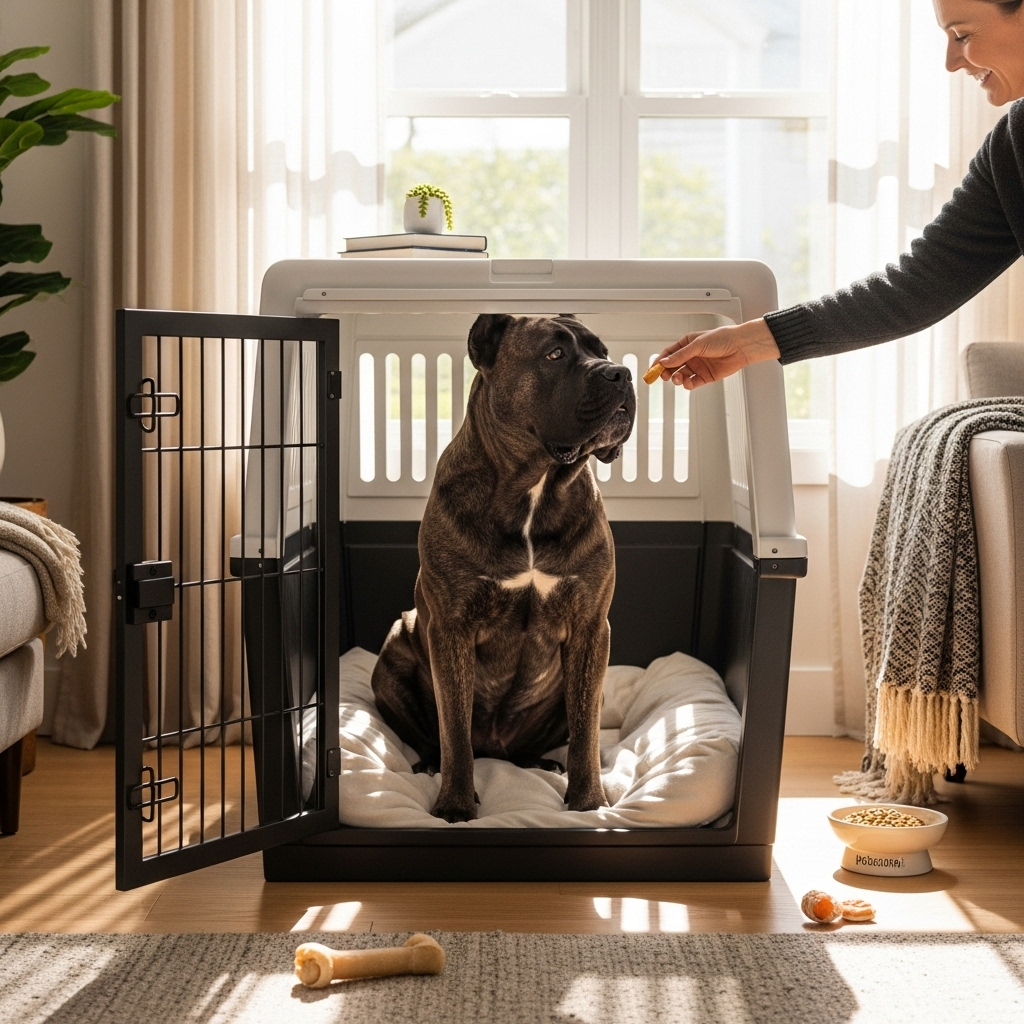
Selecting the correct crate is paramount for successful training. A Cane Corso is a large breed, so their crate needs to be spacious. Too small, and it will be uncomfortable; too large, and they might deem one end their potty area and the other their sleeping area, defeating the purpose of house-training.
Crate Size Guidelines
A good rule of thumb is that the crate should be just large enough for your Cane Corso to stand up, turn around, and lie down comfortably. For most adult Cane Corsos, this means a large or extra-large wire or plastic crate is necessary. It’s often recommended to get a crate that accommodates their full adult size and use a divider for puppies, allowing the space to grow with them.
Consider these dimensions as a starting point:
| Dog Size | Recommended Crate Length | Recommended Crate Width | Recommended Crate Height |
|---|---|---|---|
| Adult Cane Corso (approx. 90-120 lbs) | 48 inches | 30 inches | 32 inches |
| Cane Corso Puppy (adjust with divider) | 36-42 inches (use divider) | 23-27 inches (use divider) | 27-30 inches (use divider) |
Always measure your dog from nose to tail and shoulder to ground for the most accurate fit. Online retailers and pet supply stores often have size guides specific to breeds.
Types of Crates
There are several popular crate types, each with pros and cons:
- Wire Crates: These are popular for their ventilation and visibility. They are lightweight, foldable for easy storage, and often come with a plastic tray for easy cleaning. They allow your dog to see out, which can be comforting for some dogs but may be too stimulating for others.
- Plastic (Travel) Crates: These are typically more robust and better for transport. They offer a more den-like feel as they are enclosed on more sides. Some dogs feel more secure in these, while others may feel more confined. Ensure there is adequate ventilation.
- Wooden Crates/Furniture Crates: These are more aesthetically pleasing and can double as furniture. However, they can be heavy, less portable, and may not offer as much ventilation as wire crates.
For a Cane Corso, a sturdy wire crate with a divider is often the best starting point. It allows you to adjust the space as they grow and offers excellent airflow.
Step-by-Step Guide to Cane Corso Crate Training
The key to successful crate training is patience and positive reinforcement. Your goal is to make the crate a happy, safe, and desirable place for your Cane Corso, not a punishment zone.
Phase 1: Introduction and Positive Association
This is where you build a positive relationship between your dog and their new crate. Start with the crate door open.
- Make the Crate Inviting: Place comfortable bedding, soft blankets, and safe chew toys inside. Ensure it’s in a common area of the house where the family spends time.
- Toss Treats Inside: Start by tossing a few high-value treats into the crate, allowing your Cane Corso to go in and out freely to retrieve them. Don’t force them.
- Feed Meals in the Crate: Once they are comfortable entering the crate for treats, start feeding one or two of their meals inside. Place the food bowl towards the back of the crate. Initially, you can leave the door open.
- Introduce the Door Closing (Briefly): As your dog eats, close the door for just a few seconds. If they seem anxious, open it immediately. Gradually increase the time the door is closed as they eat.
- Add Praise and Rewards: Whenever your Cane Corso voluntarily enters the crate or stays calmly inside, offer gentle praise and maybe a small treat.
Phase 2: Short Stays and Gradual Increase
Once your dog is happy eating meals in the crate with the door closed, you can start extending the duration they stay inside.
- Short Periods of Separation: Start by leaving your dog in the crate for very short periods (e.g., 5-10 minutes) while you are home but out of sight (e.g., in another room). Return before they show signs of distress.
- Gradually Increase Time: Slowly increase the duration they spend in the crate, always returning before they become agitated or excessively vocal. Aim to build up to being able to leave them for longer periods while you are still at home.
- Introduce Outside Stimuli: Once they are comfortable with you being home but not present, start practicing leaving the house for short periods. Begin with just a few minutes – go to the mailbox, take out the trash, or walk around the block.
- Practice Leaving for Longer: As your dog becomes more comfortable, gradually extend the time you are away. Always ensure they have had a potty break and some exercise before crating.
Phase 3: Nighttime and Extended Absences
This phase builds on the successes of the previous steps.
- Nighttime Crate Training: Most dogs adapt well to sleeping in their crate overnight. Place the crate in your bedroom so they can hear and smell you, which can be reassuring. If your dog whines at night, they likely need to go to the bathroom. Take them out for a quick potty break without much interaction, then back to the crate.
- Potty Breaks: For puppies and recently adopted dogs, waking them up during the night for potty breaks is crucial. As they mature, they will be able to hold it longer. A general rule for puppies is they can hold it for their age in months plus one hour, up to a maximum of about 8 hours.
- Always End on a Positive Note: When releasing your dog from the crate, do so calmly. Avoid making a huge fuss as it can create excitement that might lead to accidents or unwanted behaviors. Simply open the door and let them come out when they are ready.
Important Considerations for Cane Corso Crate Training
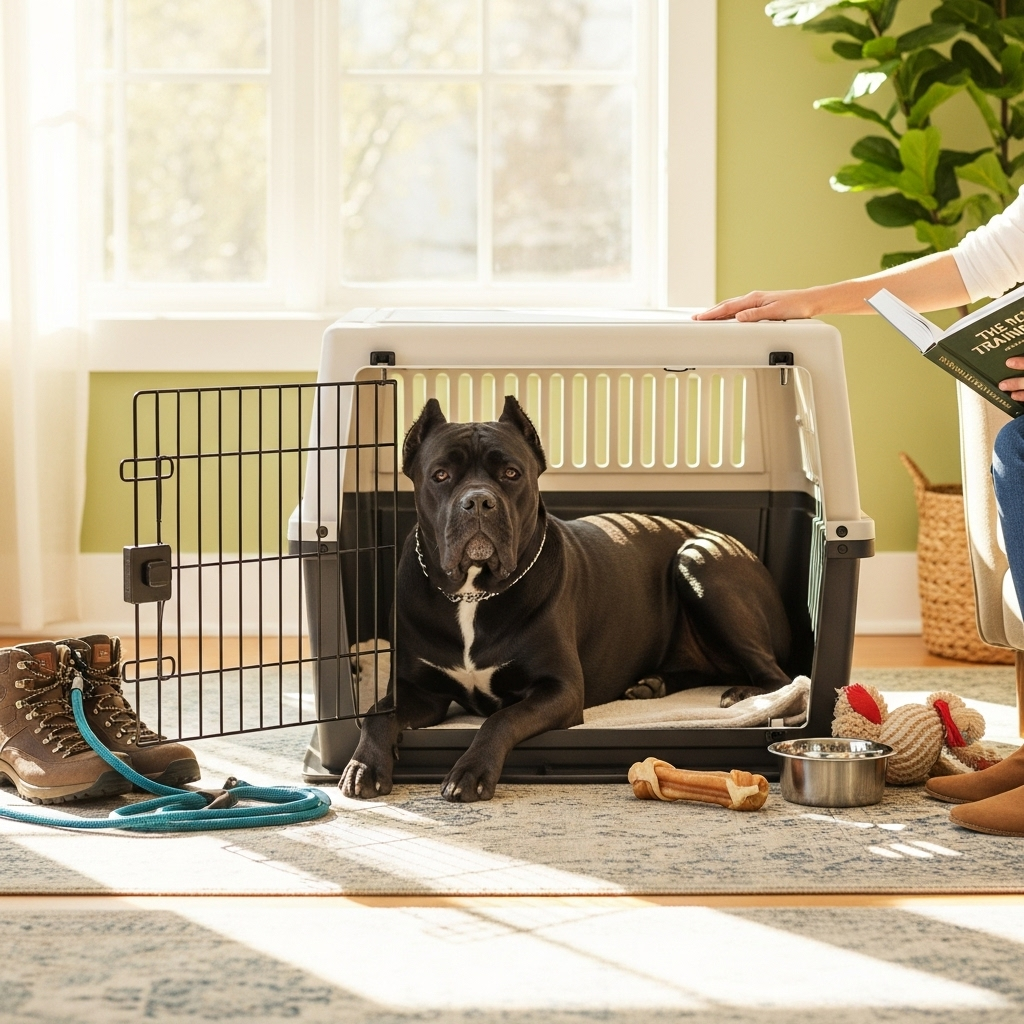
Cane Corsos are intelligent and sensitive. It’s vital to approach crate training with understanding and consistency.
What to Avoid
- Never Use the Crate for Punishment: The crate should always be a positive place. Using it to punish your dog will create negative associations and make training much harder.
- Don’t Leave Your Dog Crated for Too Long: Puppies and young dogs have lower bladder control and need frequent potty breaks. Adult dogs also need exercise and social interaction outside the crate. A good guideline for adult dogs is no more than 2-4 hours at a time during the day, and no more than 8 hours (overnight).
- Don’t Force Your Dog In: If your Cane Corso is showing fear or resistance, go back a step. Make the crate more enticing with treats and praise.
- Avoid Over-Crating: Crate training is a tool, not a complete solution. Your dog still needs plenty of exercise, socialization, and interaction with you.
Tips for Success
- Consistency is Key: Everyone in the household needs to be on the same page with the crate training rules and methods.
- Use High-Value Rewards: Special treats that your Cane Corso only gets during crate training can increase their motivation.
- Provide Engaging Toys: Sturdy, safe chew toys (like Kongs stuffed with peanut butter or food) can keep your dog occupied and happy in the crate.
- Consider a Crate Cover: For dogs who might be easily distracted or feel more secure, a breathable crate cover can help create a cozy den-like atmosphere. This can be especially helpful if the crate is in a high-traffic area.
- Exercise Before Crating: A tired dog is a good dog. Ensure your Cane Corso gets sufficient physical and mental exercise before being crated, especially for longer periods.
- Listen to Your Dog: Pay attention to their body language. If they are showing signs of extreme stress or anxiety, you may need to slow down the process or consult a professional.
Cane Corso Crate Training: A Timeline (General)
Remember, every dog is an individual, and timelines can vary. This is a general guide:
- Week 1: Introduction and Positive Association: Focus on making the crate a happy place. Short, voluntary entries with treats. Feeding meals inside.
- Weeks 1-2: Short Stays at Home: Gradually increase the duration the crate door is closed while you are present but out of sight.
- Weeks 2-3: Practicing Departures: Begin short, controlled absences from the house.
- Month 1+: Solidifying Habits: Your Cane Corso should be comfortably spending increasing amounts of time in the crate, including overnight. Adjust as needed based on their progress.
For more information on canine behavior and training, the Humane Society offers excellent resources on responsible pet ownership.
Troubleshooting Common Crate Training Issues
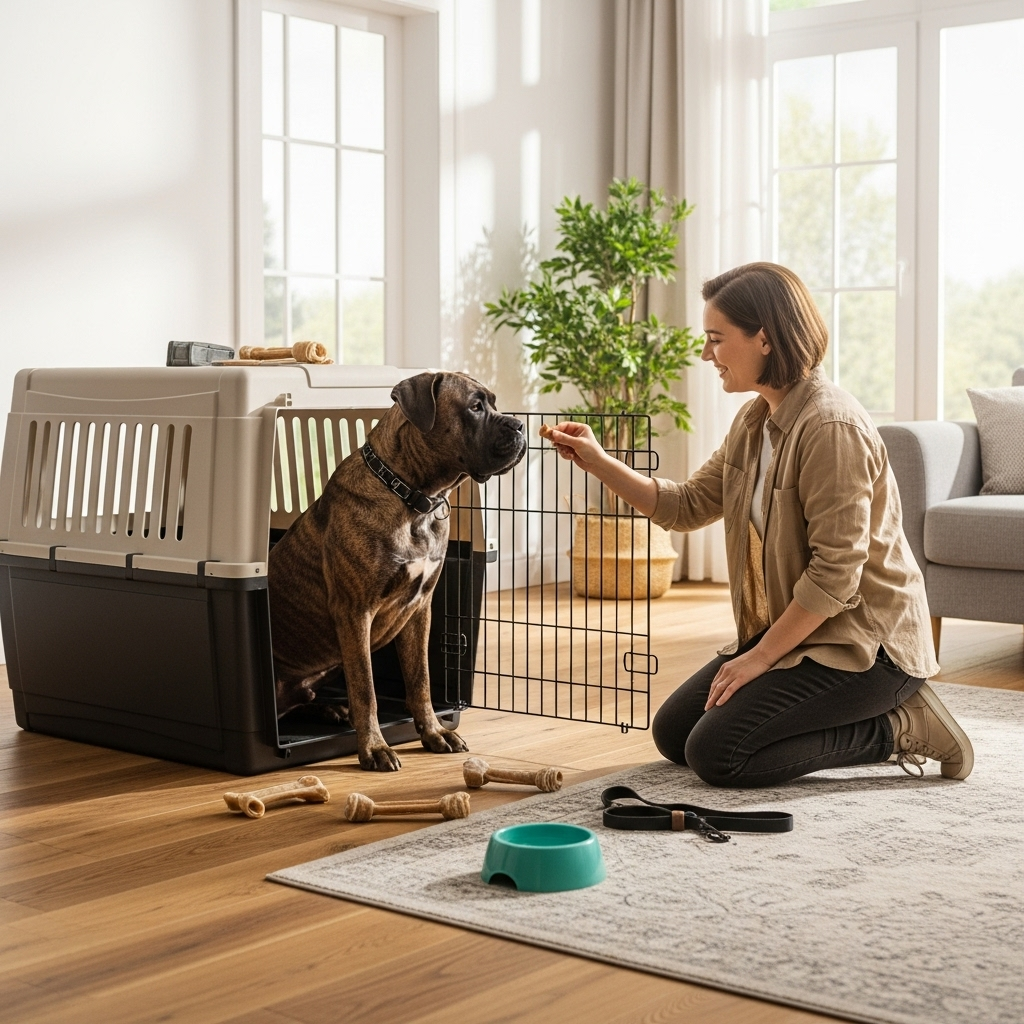
It’s not uncommon to encounter challenges. Here are some common issues and how to address them:
1. Whining, Barking, or Crying in the Crate
Cause: Usually anxiety, boredom, or the need to go to the bathroom.
Solution:
- Ensure the crate is properly sized.
- Make sure the dog has had sufficient exercise and potty opportunities before crating.
- Ignore mild, attention-seeking whining, but if it continues or escalates, or if you suspect they need to go out, take them to the potty spot calmly.
- Do not let them out when they are excessively vocal if you suspect it’s purely for attention, as this rewards the behavior.
- Try providing a stuffed Kong or a safe chew toy.
- If the anxiety is severe and persistent, it may indicate separation anxiety and require a professional trainer or veterinary behaviorist.
2. Refusal to Enter the Crate
Cause: Negative association, fear, or the crate is too intimidating.
Solution:
- Go back to the very basics: making the crate extremely inviting with high-value treats and praise.
- Leave the door open and toss treats just inside, then further back.
- Never physically force your dog into the crate.
- Associating the crate with positive experiences like meal times, special treats, or favorite toys.
3. Potty Accidents in the Crate
Cause: Crate is too large, dog was not given enough potty breaks, or a medical issue (less common if consistent).
Solution:
- If the crate is too large, use a divider to reduce the space.
- Ensure you are taking your Cane Corso out for frequent potty breaks, especially after waking up, after eating/drinking, and before crating for extended periods.
- Clean up accidents thoroughly with an enzymatic cleaner to eliminate odors that might attract them to soil the area again.
- Never punish your dog for an accident in the crate.
4. Destructive Chewing While in the Crate
Cause: Boredom, anxiety, or teething (for puppies).
Solution:
- Ensure the crate is appropriately sized.
- Provide durable, safe chew toys inside the crate.
- Increase the dog’s daily exercise and mental stimulation.
- Rule out separation anxiety if this occurs primarily when you leave.
- Ensure all items in the crate are safe and cannot be ingested if chewed. Avoid placing anything in the crate that could pose a hazard.
Benefits of Crate Training Beyond Puppyhood
Crate training isn’t just for puppies. Adult dogs, especially those from shelters or with past behavioral issues, can benefit immensely from a well-managed crate. For a Cane Corso, which can be prone to protectiveness, having a secure den can also help them feel less threatened by unfamiliar situations or people entering their space unsupervised.
An adult Cane Corso who has been crate trained positively will likely view their crate as a place of rest and security, making them easier to manage during times of stress, travel, or when they are left alone.
FAQ: Your Cane Corso Crate Training Questions Answered
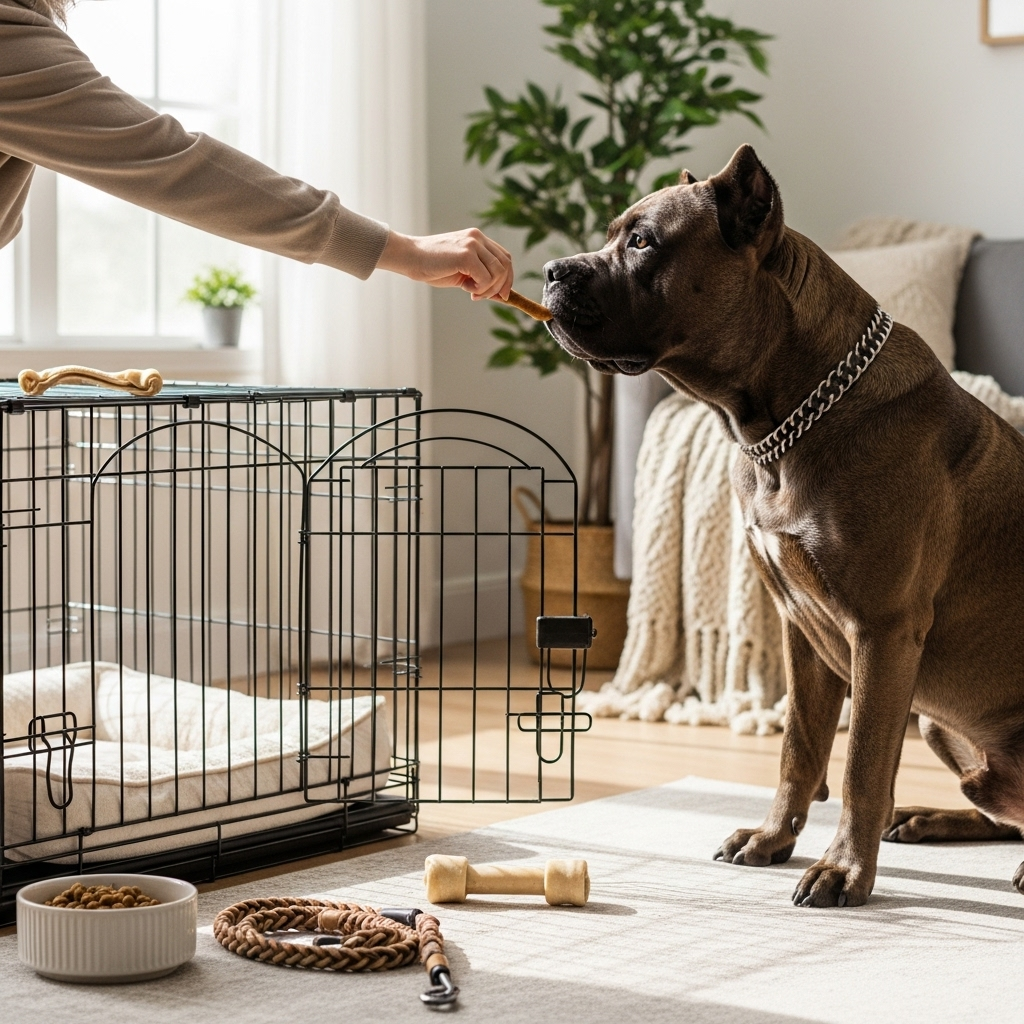
Q1: How long should I leave my Cane Corso in the crate each day?
For puppies, aim for no more than 2-4 hours during the day, with frequent potty breaks. Adult Cane Corsos generally do well with up to 4 hours at a time, and a maximum of 8-10 hours overnight. Always ensure they have ample exercise and interaction outside the crate.
Q2: My Cane Corso cries and barks non-stop when I put them in the crate. What should I do?
This often indicates anxiety or a need for more positive association. Start by making the crate more inviting with their favorite treats and toys. If the barking is excessive and you’ve ruled out the need to go to the bathroom, try ignoring it temporarily, returning only when they are quiet, even for a few seconds. Gradually increase the quiet periods before rewarding. If it persists, consult a professional trainer.
Q3: Is it okay to use the crate as punishment for my Cane Corso?
Absolutely not. The crate should be a safe, positive space. Using it for punishment will create fear and aversion, making training much more difficult and jeopardizing your relationship with your dog.
Q4: My Cane Corso is fully grown. Is it too late to start crate training?
It’s never too late! Adult dogs can certainly be crate trained. The process might take a little longer than with a puppy, as you’ll need to help them overcome any negative associations they may have. Patience and positive reinforcement are key for adult dogs, just as they are for puppies.
Q5: What kind of bedding is best for my Cane Corso in their crate?
Use comfortable, washable bedding like soft blankets or a durable dog bed. Ensure it’s something they can